What Is a Cold Call in Sales: Guide for 3PLs & Freight
A cold call in sales is an unsolicited call to a potential customer who has had no prior contact with you, and the average meeting-booked rate still sits around 2% to 3%. In logistics, though, that first call no longer has to feel random. In 2026, better data turns it from a blind interruption into […]
A cold call in sales is an unsolicited call to a potential customer who has had no prior contact with you, and the average meeting-booked rate still sits around 2% to 3%. In logistics, though, that first call no longer has to feel random. In 2026, better data turns it from a blind interruption into a strategic first touch with the right shipper, on the right lane, with a reason to listen.
If you're in freight sales right now, you probably know the feeling. You have a list, half the contacts are stale, the companies are broad matches at best, and your team is expected to produce pipeline anyway. That old version of cold calling burns time and morale.
The modern version is different. A good logistics rep doesn't call everyone who might move freight. They call the accounts that fit capacity, geography, service model, and timing. They call with context. They ask better questions. And they judge success by whether the call advances the deal, not whether someone says yes on the spot.
The Modern Definition of a Cold Call in Sales
A new logistics rep often starts with the wrong picture of cold calling. They think it means picking up the phone, dialing down a huge list, and hoping somebody has an urgent shipment problem that day. That's not a sales process. That's activity without control.
What is a cold call in sales? It's a first phone conversation with a prospect who hasn't engaged with your company before. The prospect doesn't know you yet, but they should still fit your target account profile. In freight, that usually means the shipper matches the lanes you serve, the mode you sell, the shipment profile you handle well, or the industries where your operations team can win.
What changed in practice
The old stereotype was random dialing. The current reality is targeted outbound. A rep may still be making a cold call because there was no prior relationship, but the call shouldn't be uninformed.
If a shipper imports consumer goods through specific ports, or regularly moves air freight into a market where your team has capacity, that call is still technically cold. It just isn't blind. That distinction matters, because relevance is what keeps the first 20 seconds alive.
Teams that want tighter prospect discipline usually benefit from a stronger qualification process before outreach ever starts. A practical reference on that is this guide to B2B lead management, especially if your sales list keeps mixing real prospects with companies that will never buy.
You can also see how this fits into broader freight prospecting workflows in this sales in logistics overview.
Cold call, warm call, and cold email are not the same
A lot of reps blur these together. They shouldn't.
| Outreach Method Comparison | |||
|---|---|---|---|
| Method | Prospect Awareness | Typical Goal | Key Advantage |
| Cold calling | No prior contact | Start a live conversation and qualify fit | Immediate feedback |
| Warm calling | Some prior awareness or interaction | Re-engage and move toward a meeting | Lower friction |
| Cold emailing | Usually no prior contact | Earn a reply or create recognition before a call | Scales personalization asynchronously |
Practical rule: If the account fits your freight offering but hasn't interacted with you yet, the call is cold. If the person recognizes your company from a referral, event, reply, or prior touch, it isn't.
That sounds simple, but it changes how you coach a team. Cold calling isn't the same as "calling." It sits in a larger outbound cadence, and it does one job well. It creates a live opening where a shipper can confirm a problem, dismiss a fit, or point you to the decision-maker.
For logistics sellers, that live feedback is the point. Email can be ignored. A call tells you whether the lane matters, whether the incumbent is vulnerable, and whether the contact owns transportation.
Why Cold Calling Is a Superpower for Logistics Growth
A rep calls a shipper on Tuesday morning with one useful piece of context. Imports from Southeast Asia are rising, the company just opened a new distribution point, and carriers on one of its likely inland lanes are tightening. That call feels very different from dialing down a generic list and asking who handles freight.
In logistics, that difference is everything.
A cold call still gives you information no database captures cleanly. A shipper may be testing a new vendor before bid season, shifting an origin, fighting rollover issues, or trying to fix service failures that procurement has not documented anywhere public.

The advantage now is that strong reps do not start fully cold. Tools like Coreties help teams narrow the field before they pick up the phone. You can prioritize accounts by shipment patterns, mode fit, geography, and likely buying triggers, then call with a reason that matches the account. The conversation starts warmer because the targeting is better.
That is why cold calling keeps producing growth in freight. It creates access to live operating truth. You find out whether the lane matters, whether the incumbent is slipping, whether the prospect is adding volume, and whether you are even talking to the right person. If you are not, use a process for finding the right transportation decision-makers instead of burning more dials on the wrong contact.
Where calls create real freight opportunities
A strong freight call uncovers timing, constraints, and commercial fit.
For a carrier sales rep, that can mean spotting backhaul freight that improves network balance and margin. For a forwarder, it can mean learning that a shipper is tired of poor milestone visibility, inconsistent transit times, or weak exception handling on a trade lane you know well. For a broker, it can mean hearing that a plant is adding volume next quarter and current coverage is already thin.
Those openings rarely show up in a purchased list.
Good outbound work in freight is less about reading a script and more about calling with a point of view. If you want a simple framework for structuring an opener, this outbound call script for founders is useful as a reference, but freight reps still need to adapt the message to lane pressure, mode needs, and service risk.
Why persistence beats random volume
Outbound in logistics rewards organized follow-up. Transportation managers are busy. Procurement teams screen aggressively. Operations leaders answer when the issue feels immediate.
So the job is not to repeat the same pitch five times. The job is to vary the contact around a credible reason to talk.
- Change the business angle: Lead with import congestion on one touch, capacity risk on another, and service failures or missed appointments on the next.
- Use account-specific signals: If your data shows likely drayage exposure, port activity, regional expansion, or recurring lane fit, bring that into the conversation.
- Redirect fast: If the contact does not own transportation, ask who handles routing guides, carrier selection, forwarding, or spot coverage.
The best reps stay persistent without sounding repetitive.
Cold calling works in logistics because freight buying is still operational and personal. Buyers trust people who understand detention, appointment failures, mode shifts, tender rejections, and the cost of a late delivery. Email helps. A live call gives you a chance to prove you understand the work.
The Blueprint for a High-Converting Logistics Cold Call
A rep calls a shipper at 10:07 a.m. and opens with, "Just checking if you handle freight." That call is dead on arrival. A logistics cold call converts when the rep already knows enough to make the conversation relevant in the first 15 seconds.
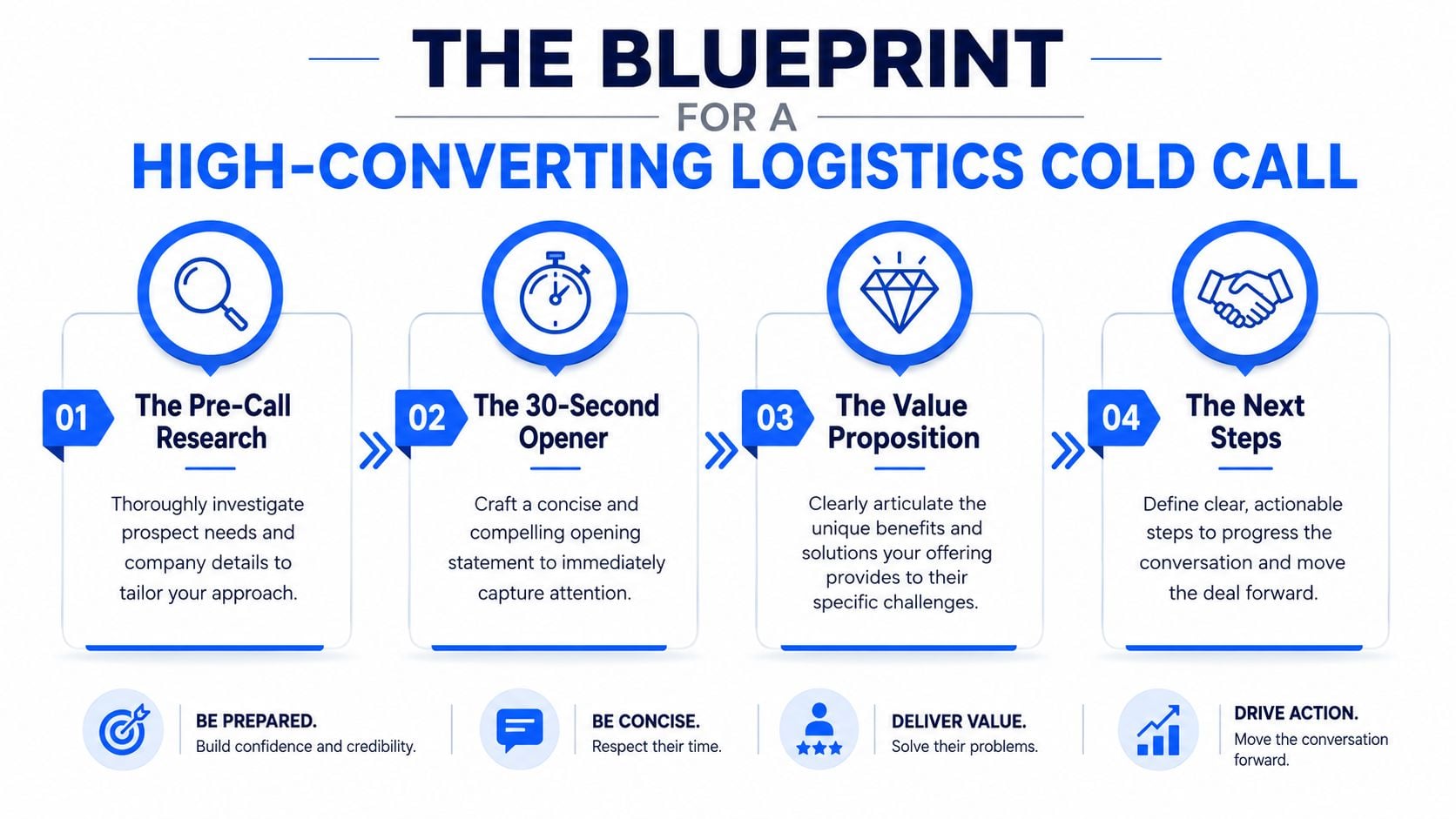
Start with account context
Freight buyers do not reward generic outreach. They respond when the caller sounds like someone who understands how transportation works inside their business.
That means preparing around account facts, not memorizing a script. Know the likely mode mix, the shipping pattern, the pressure point, and who probably owns the decision. If your tools show import activity, port exposure, regional distribution, or a lane fit your team serves well, use that. Platforms like Coreties help reps turn a cold list into a prioritized call sheet with enough context to ask a smart question on the first attempt.
The goal is simple. Reduce uncertainty for the prospect. If they can tell in one sentence why you called, resistance drops.
Open with a reason, then ask one useful question
A strong opener sounds specific and easy to answer. It does not sound polished for the sake of sounding polished.
A practical freight opener sounds like this:
"Hi Sarah, how are you doing? I'm calling because your team looks active on inbound container freight through Savannah, and I wanted to ask who reviews forwarding options when schedules slip or costs move."
That opener works because it does three jobs fast:
- It sounds human: The rep talks like a person.
- It establishes relevance: The call references a real shipping context.
- It gives the prospect an easy path: They can confirm, redirect, or correct.
For teams tightening language, this outbound call script for founders is a useful reference for structure. Freight teams still need to adapt the wording to mode, lane pressure, and service risk. If the rep is not sure who owns transportation decisions, this guide on how to find decision-makers at shipper accounts helps before the first dial.
A short training clip can help reps hear pacing and delivery, not just read a script.
Talk in operating terms
Once the buyer engages, keep the conversation tied to work they already manage. Freight prospects do not need a broad capability speech. They need a clear reason to believe your team can improve part of their operation.
Use language that matches the account:
- For shippers: Focus on service consistency, appointment performance, lane coverage, and fewer exceptions.
- For importers: Focus on routing options, trade lane familiarity, and response speed when plans change.
- For carrier-side conversations: Focus on network fit, volume alignment, and where your capacity solves a known need.
Specific beats broad. "We handle international freight" is forgettable. "We help importers with time-sensitive Asia to U.S. moves when schedule changes start affecting downstream appointments" gives the buyer something concrete to react to.
Ask for the next meeting the call has earned
Cold calls in freight rarely close business on the spot. They create the next serious conversation. That may be a lane review, a pricing discussion, an introduction to procurement, or a call with the transportation manager.
Keep the close direct and low pressure:
"If this lane is active for your team, would a short call next week make sense with whoever reviews forwarding options?"
That works because it respects the buyer's process. It also gives your rep a clean outcome to track. In practice, the best cold calls do not feel cold at all. They feel like timely conversations backed by real account context.
Supercharge Your Calls with Data Driven Insights
The biggest mistake in freight outbound is calling with generic assumptions. "Do you ship internationally?" "Are you reviewing providers?" "Can I tell you about our services?" Those questions waste the small window you get on a live connect.
Modern sales teams fix that by replacing guesswork with account intelligence.
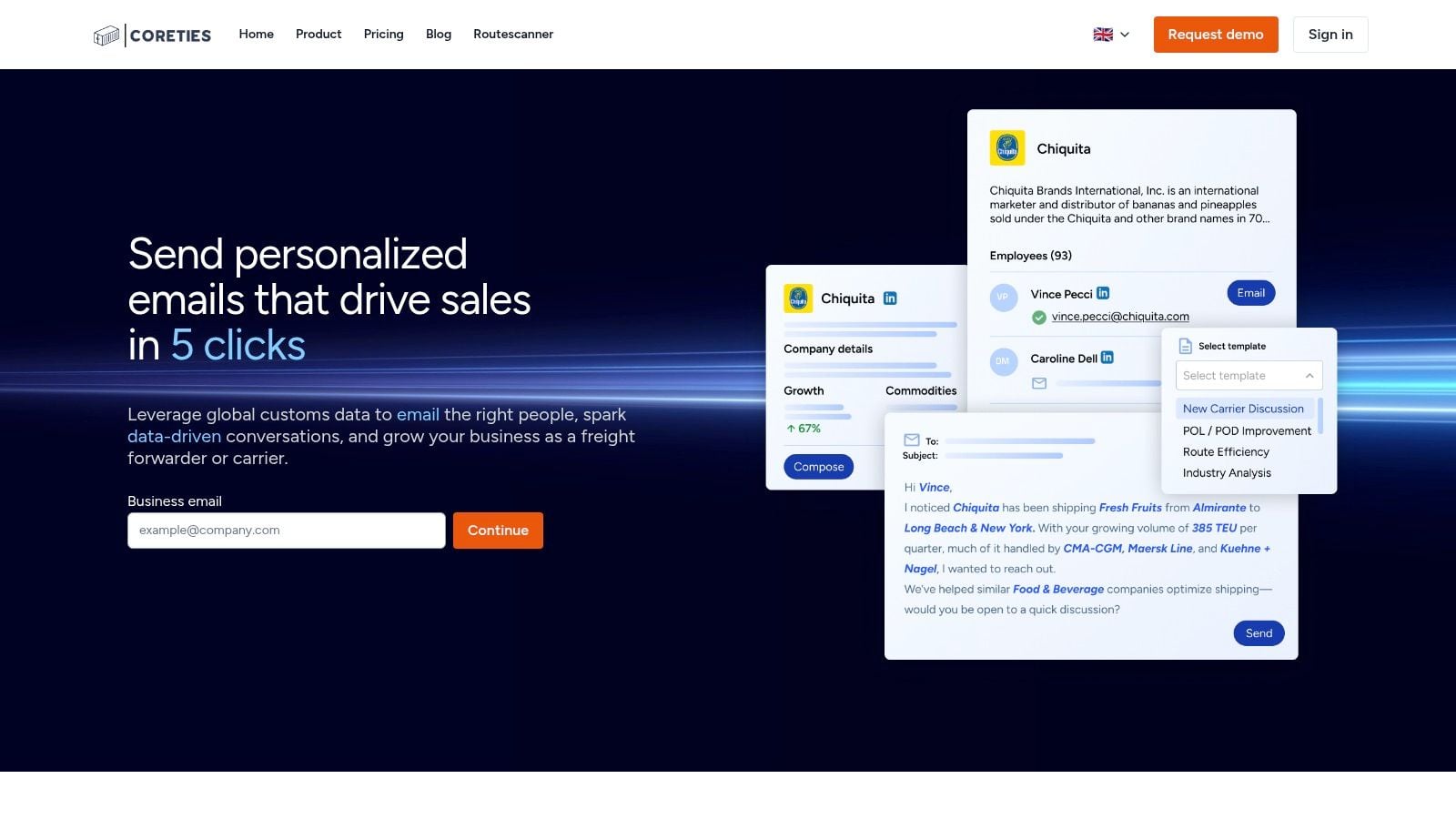
What a smart call sounds like
A generic call sounds cold because the rep doesn't know enough to be relevant. A smart call still reaches out first, but it opens with evidence the rep understands the account.
That changes the conversation.
Instead of asking whether a company imports, the rep references known trade activity. Instead of asking who handles logistics, the rep calls the most likely decision-maker. Instead of talking about broad capabilities, the rep speaks to the lane, mode, or routing pressure most likely to matter.
Here is the difference in practice:
| Call Style | Opening Approach | Prospect Reaction |
|---|---|---|
| Generic cold call | Broad introduction and company pitch | Low patience |
| Data-informed call | Specific business context and relevant question | Higher credibility |
| Warm follow-up call | Builds on prior interaction or signal | Easier progression |
What to prepare before the dial
For logistics teams, useful call prep usually comes from a combination of shipment visibility, account fit, contact quality, and outreach workflow discipline.
- Shipment context: Look for lane patterns, origin-destination relevance, and signs that your service model fits the account.
- Contact precision: Call the person most likely to own transportation, procurement, forwarding, or supply chain decisions.
- Message tailoring: Match your reason for calling to the account's likely shipping reality, not your internal product list.
- Follow-up system: If a live conversation doesn't happen, queue an email and next touch while the details are fresh.
Teams that want stronger process around sequencing and rep coordination can learn from examples of sales team outreach automation. For broader workflow planning, this guide to sales intelligence tools helps frame what data improves outreach quality.
Better data doesn't replace selling skill. It gives selling skill something accurate to work with.
Why this matters in freight
Freight buyers hear the same claims all day. Good service. Competitive rates. End-to-end solutions. Those phrases are too broad to create trust.
Specificity does. If the rep knows the account likely moves on a lane where their company has a real operational advantage, the conversation becomes useful faster. That's how a cold call starts to feel warm. Not because the prospect knows you, but because the call sounds informed enough to deserve a response.
That shift also improves rep discipline. When each call starts with actual context, managers can coach quality. They can inspect whether the rep chose the right account, reached the right person, framed the lane correctly, and asked a real qualification question.
Measuring Success and Ensuring Compliance
Many freight teams still measure cold calling the wrong way. They celebrate dials, talk time, or how busy the rep sounded that day. Those numbers can describe effort, but they don't tell you whether outbound is creating pipeline.
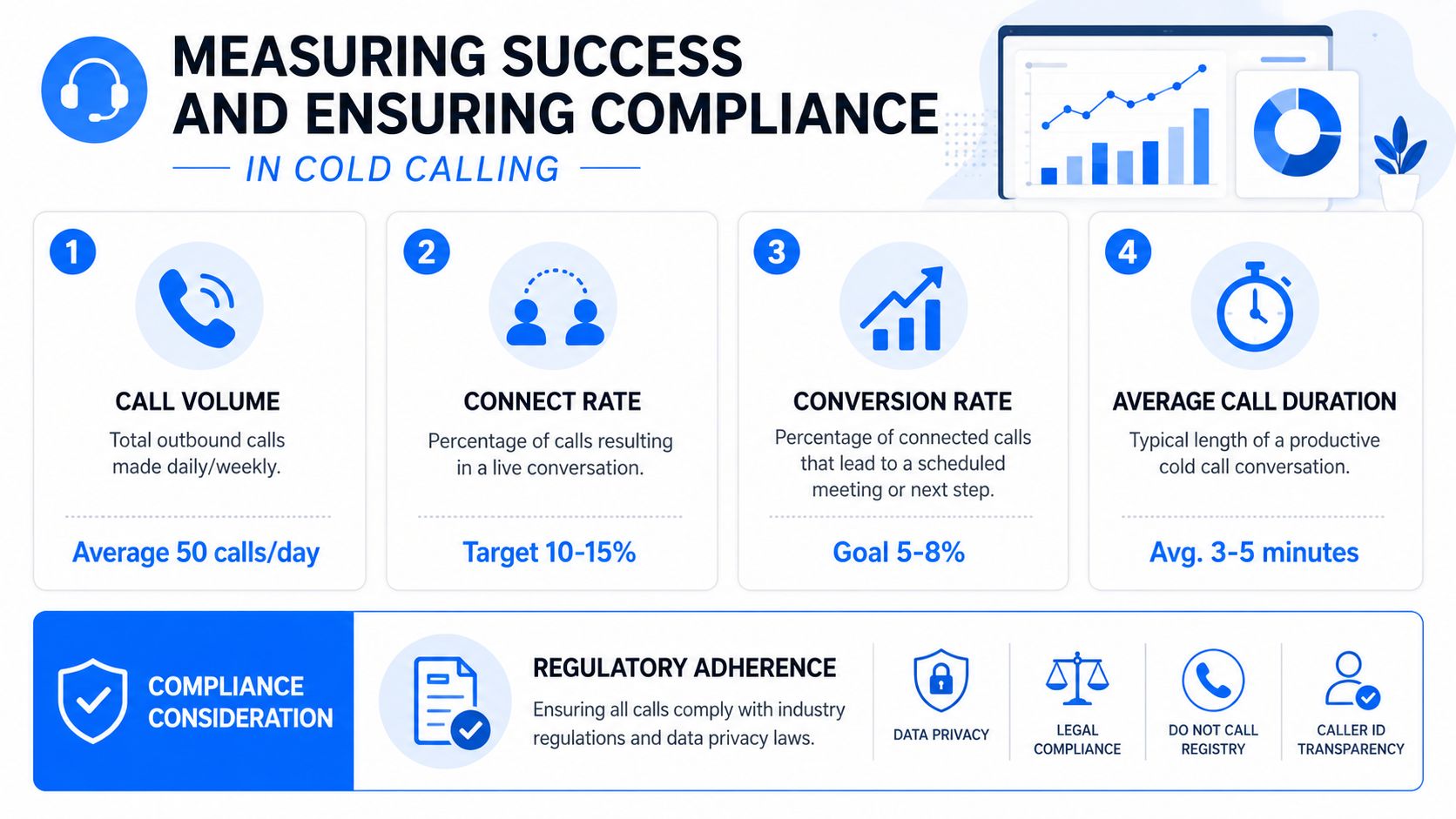
Track what moves the deal
The cleanest way to measure cold calling is to treat it like a pipeline advancement system.
According to RingCentral's definition of cold calling, calls must be made between 8 a.m. and 9 p.m. in the prospect's local time, callers must identify themselves and their organization, and the main success metric should be advancing the prospect to the next pipeline stage rather than trying to force an immediate sale.
That standard fits freight sales well. A productive call might result in a follow-up meeting, a referral to the transportation lead, a lane review, or permission to quote. Those are real outcomes. They move the account forward.
A practical scorecard should include:
- Connect quality: Did the rep reach a real stakeholder or just complete a dial?
- Conversation relevance: Did the call uncover lane, provider, timing, or ownership information?
- Next-step rate: Did the rep earn a meeting, introduction, or agreed follow-up?
- Data improvement: Did the rep leave the account record cleaner than they found it?
Compliance is part of professionalism
Compliance isn't separate from good sales. In outbound freight prospecting, it protects reputation and keeps your team disciplined.
At minimum, reps should follow a few essential rules:
- Call during allowed hours: Use the prospect's local time, not the rep's.
- Identify yourself clearly: State your name and company early.
- Avoid deception: Be direct about why you're calling and what your business does.
- Document outcomes: Record requests, objections, next steps, and any opt-out signals accurately.
Professional outbound teams don't just sound organized on the phone. They prove it in their records.
One more management point matters here. If your team is chasing vanity metrics, they will take bad shortcuts. If they are measured on clean qualification and next-step creation, call quality improves and compliance gets easier to maintain.
Conclusion From Cold Contact to Valued Partner
A cold call continues to be what it always was. It's a first conversation with someone who hasn't engaged with you before. What changed is how good teams prepare for it.
In logistics, the difference between a useless cold call and a productive one comes down to relevance. Random dialing produces random outcomes. Focused account selection, better contact targeting, and a clear lane-based reason for calling produce conversations worth having.
The reps who win freight business don't rely on volume alone. They call the right accounts, ask sharp questions, and treat the phone as a tool for qualification and trust building. They don't try to close everything on the first touch. They move the deal forward one credible step at a time.
That's the answer to what is a cold call in sales today. It's not a relic. It's a disciplined first move. When logistics teams use data to narrow who they call and why, the "cold" part starts disappearing. What remains is a direct, useful conversation that can turn a stranger into a qualified opportunity, and eventually into a long-term shipper relationship.
Coreties helps freight teams make cold outreach far less cold. If you want to find qualified shippers, identify the right decision-makers, and start sales conversations with lane-specific context instead of generic guesswork, Coreties gives your team a practical way to do it.