DuBose Strapping Inc: A Complete Company Profile for 2026
A load leaves the mill looking stable. By the time it reaches the consignee, the pallet has shifted, the outer packaging is torn, and everyone in the chain starts asking the same question: who was responsible for securement? Freight forwarders live in that gap between dispatch and delivery. You may not have packed the shipment […]

A load leaves the mill looking stable. By the time it reaches the consignee, the pallet has shifted, the outer packaging is torn, and everyone in the chain starts asking the same question: who was responsible for securement?
Freight forwarders live in that gap between dispatch and delivery. You may not have packed the shipment yourself, but you still have to answer for delays, claims, and customer frustration when cargo arrives compromised. That's why strapping suppliers matter more than many teams admit. They sit upstream of freight execution, yet their materials influence downstream outcomes like handling reliability, transload efficiency, and whether a shipment survives multiple touchpoints.
For forwarders and shippers evaluating DuBose Strapping Inc., the useful question isn't just what the company sells. It's whether its position in the market, product mix, and operating profile make it a dependable packaging partner for freight that can't afford movement inside the load.
The High Cost of Unsecured Cargo
You know the scenario. A booked shipment moves on schedule, documents are in order, and the truck arrives on time. Then the receiver opens the trailer and finds leaning units, broken edges, or bands that didn't hold under normal transit stress. What looked like a routine move turns into a claim review, customer call, and internal debate over whether the problem started at the dock, in transit, or with the packaging itself.
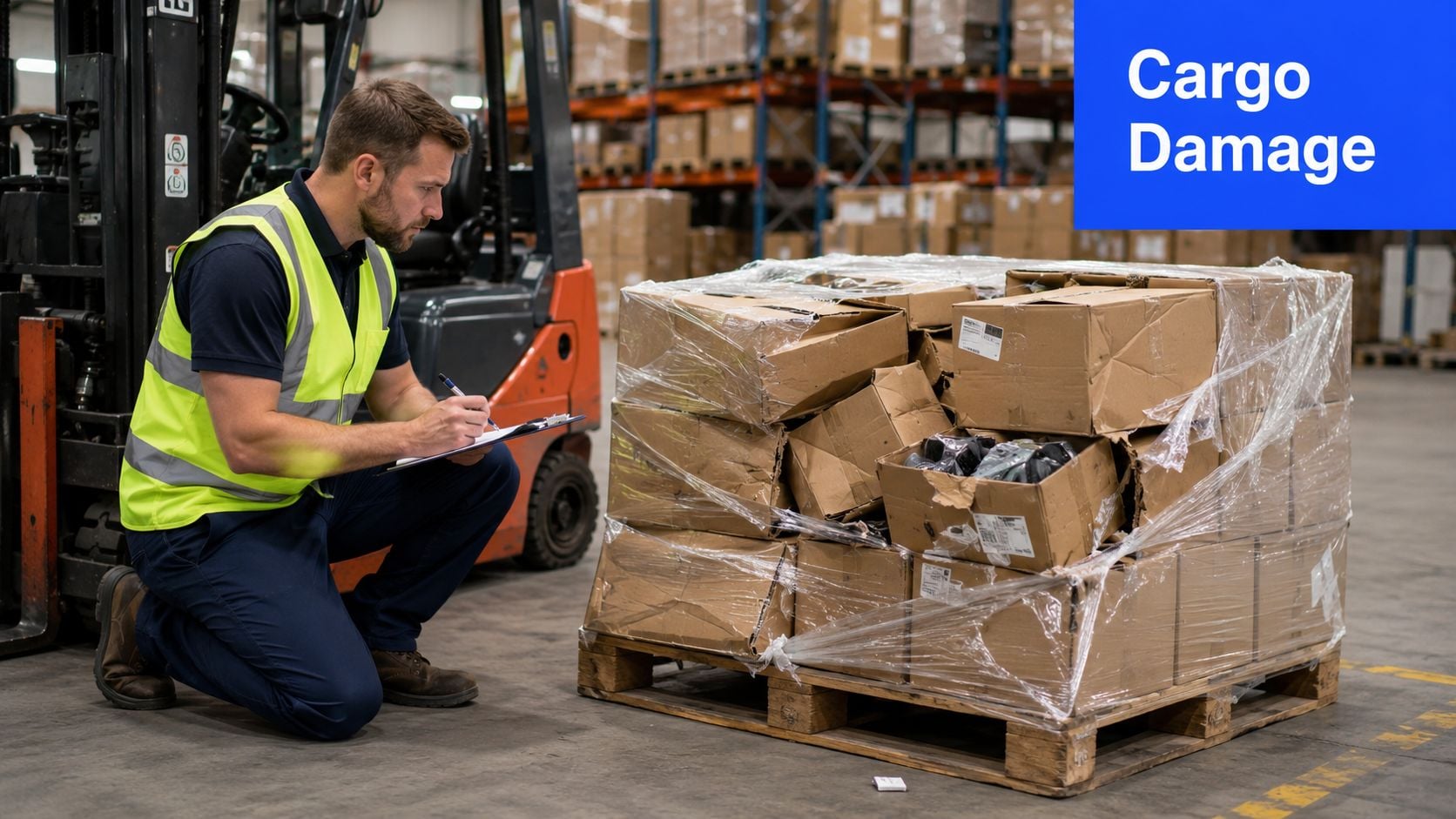
For freight forwarders, unsecured cargo creates two problems at once. The first is physical damage. The second is ambiguity. Once a shipment changes hands across truckers, warehouses, ports, and final delivery providers, poor securement can be hard to isolate after the fact. Even basic paperwork like the bill of lading in shipping helps document condition and custody, but it doesn't fix a load that was never properly unitized.
Practical rule: If a load depends on every downstream handler being unusually careful, the packaging strategy was weak from the start.
This is why industrial strapping isn't a small procurement line item. It's part of risk control. Good strapping and edge protection help keep units intact during forklift handling, trailer vibration, storage, and reloading. Weak or mismatched materials raise the odds that a shipment will arrive as multiple problems instead of one delivered order.
That operating reality is the right context for evaluating DuBose Strapping Inc. The company matters because it sits close to the point where cargo security either holds or fails.
The DuBose Strapping Story and Market Position
A forwarder choosing a strapping supplier is not just buying consumables. The choice affects lead times, packaging consistency, claims exposure, and how quickly a shipper can correct a securement problem before it spreads across multiple loads.
DuBose Strapping Inc. stands out because it appears to sit closer to the manufacturing side of that decision than many packaging intermediaries. The company traces its roots to 1954 under founder Charles DuBose, Sr., first in steel services and later in steel strapping and international manufacturing, according to its LinkedIn company profile.
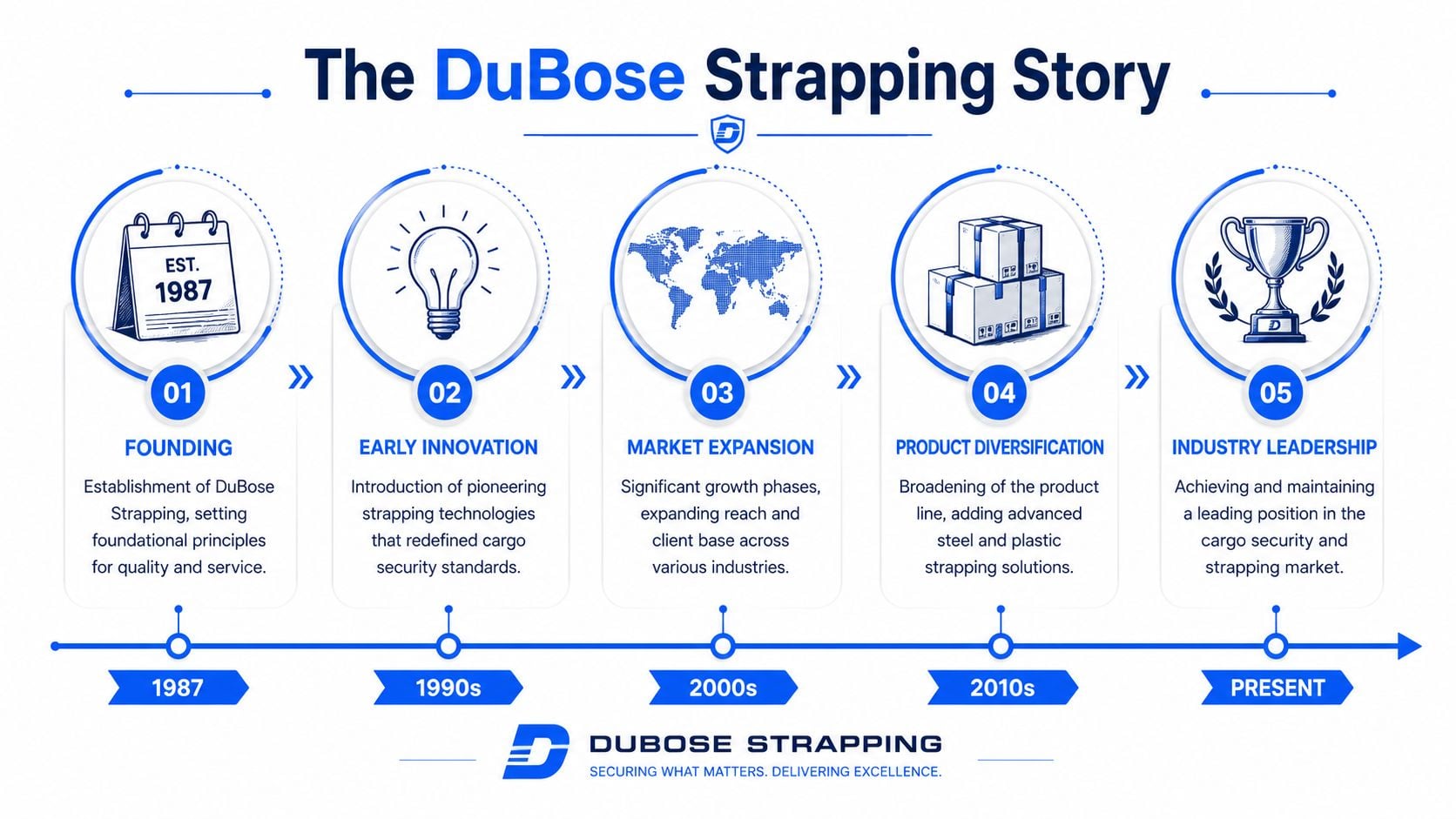
That history matters less as a branding detail than as a signal about operating model. DuBose describes itself as North Carolina's sole manufacturer of steel strapping and says it serves every state east of the Rockies. For freight partners, that suggests a supplier with a defined production base and a regional footprint large enough to support repeat industrial demand, not just spot purchases of packaging seals and strapping through resale channels.
Scale should still be tested rather than assumed. Even so, the available profile points to a manufacturer with enough organizational depth to matter to shippers running regular outbound volume. That changes the conversation. A forwarder evaluating DuBose would likely focus less on whether the company can fill a single order and more on whether it can support standardization across lanes, facilities, and recurring load types.
The company's age also changes how buyers should read risk.
- Longevity can indicate process discipline: A manufacturer that has operated since 1954 has likely adjusted through shifts in materials markets, freight handling, and customer requirements.
- Production capability can improve control: A manufacturer usually has more direct influence over product consistency and availability than a distributor that relies mainly on third-party supply.
- Leadership continuity can reduce supplier volatility: DuBose presents family involvement over multiple decades, which may appeal to buyers trying to avoid frequent changes in account ownership or operating priorities.
The useful takeaway isn't that an older company is automatically better. A long-lived manufacturer with a defined territory often behaves differently from a generalist packaging middleman.
For freight forwarders, that difference has practical consequences. If a shipper moves metal, lumber, or other heavy palletized freight, supplier stability affects replenishment planning, packaging standardization, and response speed when securement failures start showing up in the field.
Core Products for Cargo Security
The strongest signal in DuBose's offering is breadth. The company provides customized packaging solutions that include plastic and steel strapping, automated equipment, hand application tools, and edge protection systems for a wide range of industries, according to its ZoomInfo company profile. It also manufactures plastic strapping and systems for diverse product lines.
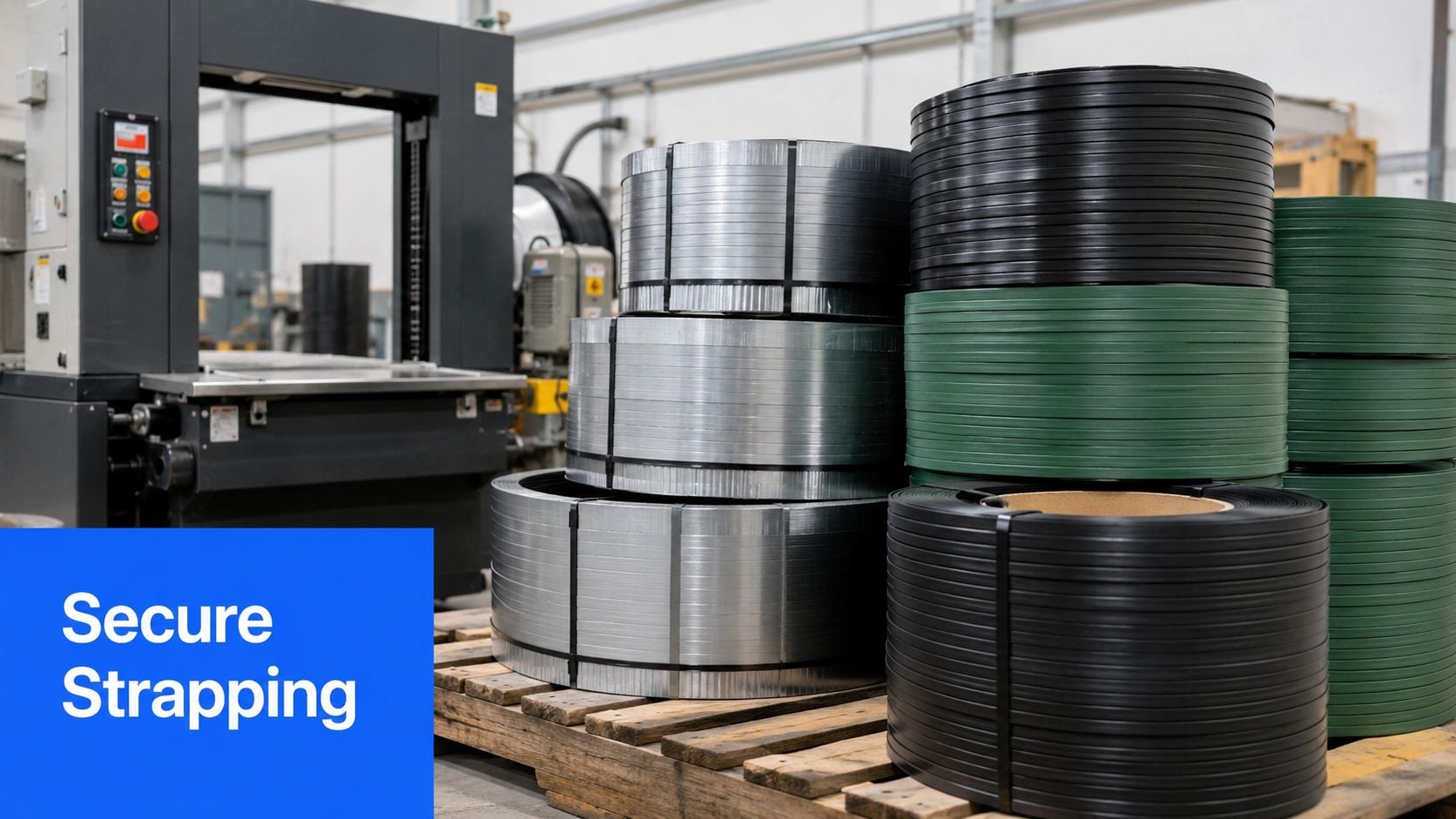
That combination matters because freight securement isn't solved by strapping alone. Material choice, tensioning method, tool reliability, and edge protection all affect whether the load stays unitized through handling and transit.
Matching the product to the freight
A forwarder advising a shipper should think in terms of load behavior, not catalog categories.
| Product area | Best-fit logistics question |
|---|---|
| Steel strapping | Does the load have high mass, rigid edges, or a need for strong compression? |
| Plastic strapping | Does the shipment need a lighter, more flexible unitizing method across varied product lines? |
| Automated equipment | Is the shipper running enough volume that consistency matters more than manual variability? |
| Hand tools | Does the operation need adaptable securement at smaller scale or in mixed loading environments? |
| Edge protection | Are package corners, surfaces, or stacked units vulnerable to band pressure? |
Steel strapping is often the logical fit when the cargo is dense, heavy, or difficult to restrain with lighter materials. That's why DuBose's role in steel matters to lumber and industrial users. Plastic strapping, by contrast, tends to fit operations that need versatility across many SKUs and packaging configurations.
Why system thinking beats product shopping
Forwarders often inherit the consequences of partial decisions. A shipper buys the banding material, but not the right tools. Or it automates the line without upgrading edge protection. Or it uses a hand setup for freight that really needs repeatable tensioning.
That's where DuBose's broader line becomes operationally relevant. The presence of tools, equipment, and protective accessories suggests the company can support a securement system, not just sell rolls of material.
If you're comparing solutions more broadly, this overview of packaging seals and strapping is a useful reference point for understanding how seals, tools, and strapping supplies fit together in real handling environments.
Here's a visual look at industrial strapping in practice:
Questions buyers should ask at the product level
Not every shipper needs the same answer. The right evaluation starts with freight realities.
- For heavy outbound loads: Ask which strapping systems fit dense products that face repeated forklift handling.
- For mixed-SKU palletization: Ask how plastic strapping options perform across inconsistent carton shapes or shifting stack heights.
- For warehouse throughput: Ask whether automated equipment improves consistency for the shipper's packaging line.
- For damage-sensitive goods: Ask how edge protection integrates with the selected banding method.
A supplier with multiple product categories can simplify this process, but only if the recommendation is tied to the actual freight profile. That's the difference between buying supplies and solving a cargo security problem.
Key Industries Served and Use Cases
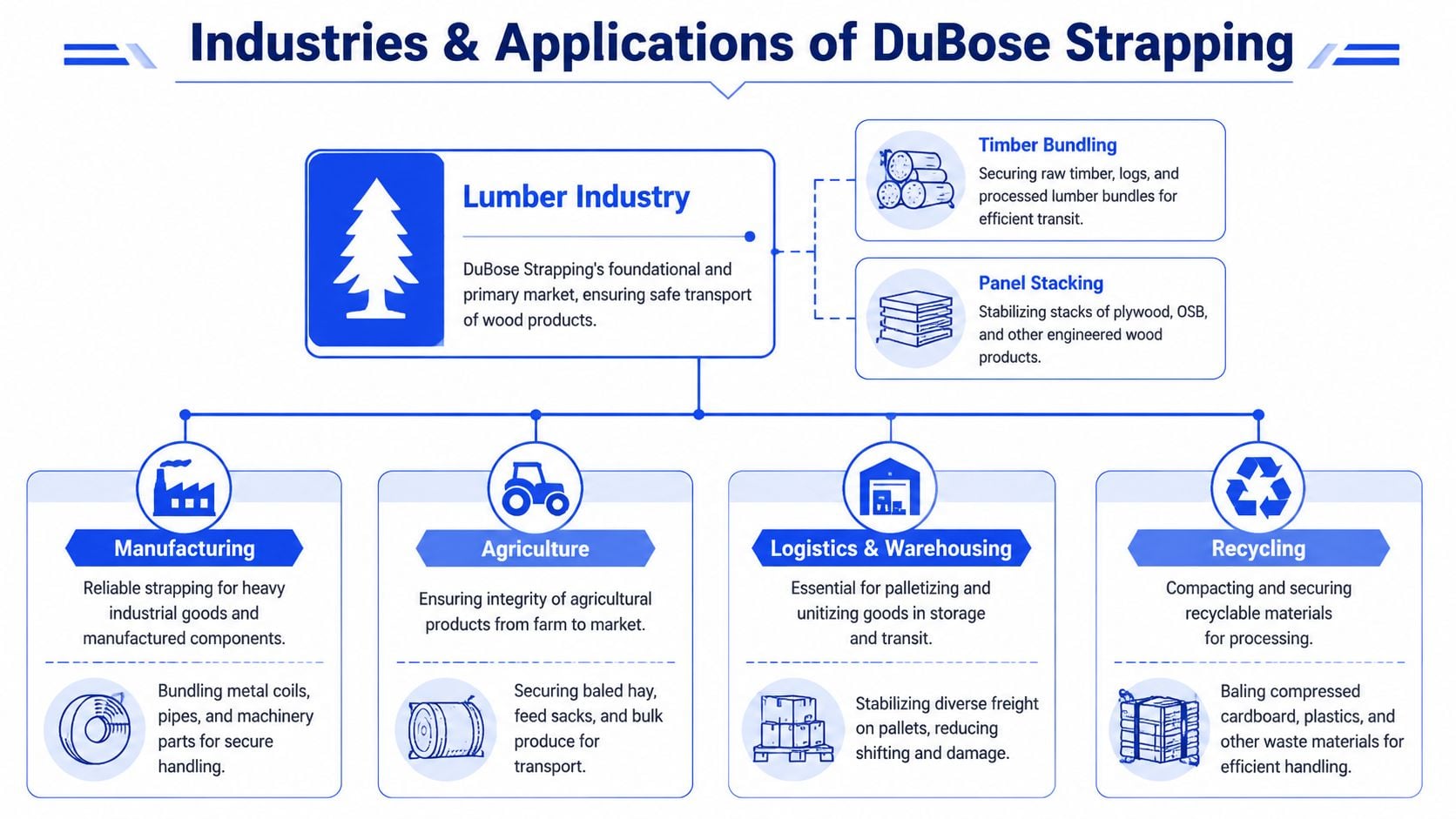
The company's roots are closely tied to the lumber industry, but its packaging systems extend into a wider set of industrial applications. That range is useful for freight forwarders because it means one supplier may align with several shipper types in a regional or vertical portfolio.
Lumber and wood products
Start with the most obvious use case. A lumber shipper moving bundles of finished boards, panel products, or mill output needs more than basic containment. The load has weight, edge pressure, and a tendency to shift if the bundle loosens. In that context, strong strapping and edge protection support both cargo integrity and handling efficiency.
A forwarder serving mills or building-products exporters should read DuBose's positioning here as a sign of application familiarity, not just product availability.
Loads like lumber don't forgive weak packaging decisions. If the bundle opens, the freight plan changes immediately.
Manufacturing and industrial freight
The next use case is less visible but equally important. Industrial manufacturers often ship awkward, dense, or high-value units that don't fit neatly into standard cartonized workflows. Pipes, fabricated parts, bundled components, and irregular pallet loads all create securement challenges.
In those environments, the value of a supplier like DuBose is its ability to support different combinations of strapping material, tools, and protective systems. A forwarder working with these customers doesn't need a packaging vendor that only serves one commodity. It needs one that understands load stability across varied industrial formats.
Warehousing, agriculture, and recycling
Other sectors fit the same logic, even if the load profile differs.
- Warehousing and distribution: Unitizing outbound pallets so they survive storage, picking, and final-mile transfers.
- Agriculture: Securing bagged inputs, baled goods, or stacked products that may be handled in less controlled environments.
- Recycling: Holding compressed or irregular material together for movement and processing.
These are different industries, but they share a common operational need. The shipment has to remain one manageable unit from origin through handling. Forwarders who advise customers on packaging readiness can use that lens to identify where DuBose may be a fit.
How to Evaluate DuBose as a Supplier
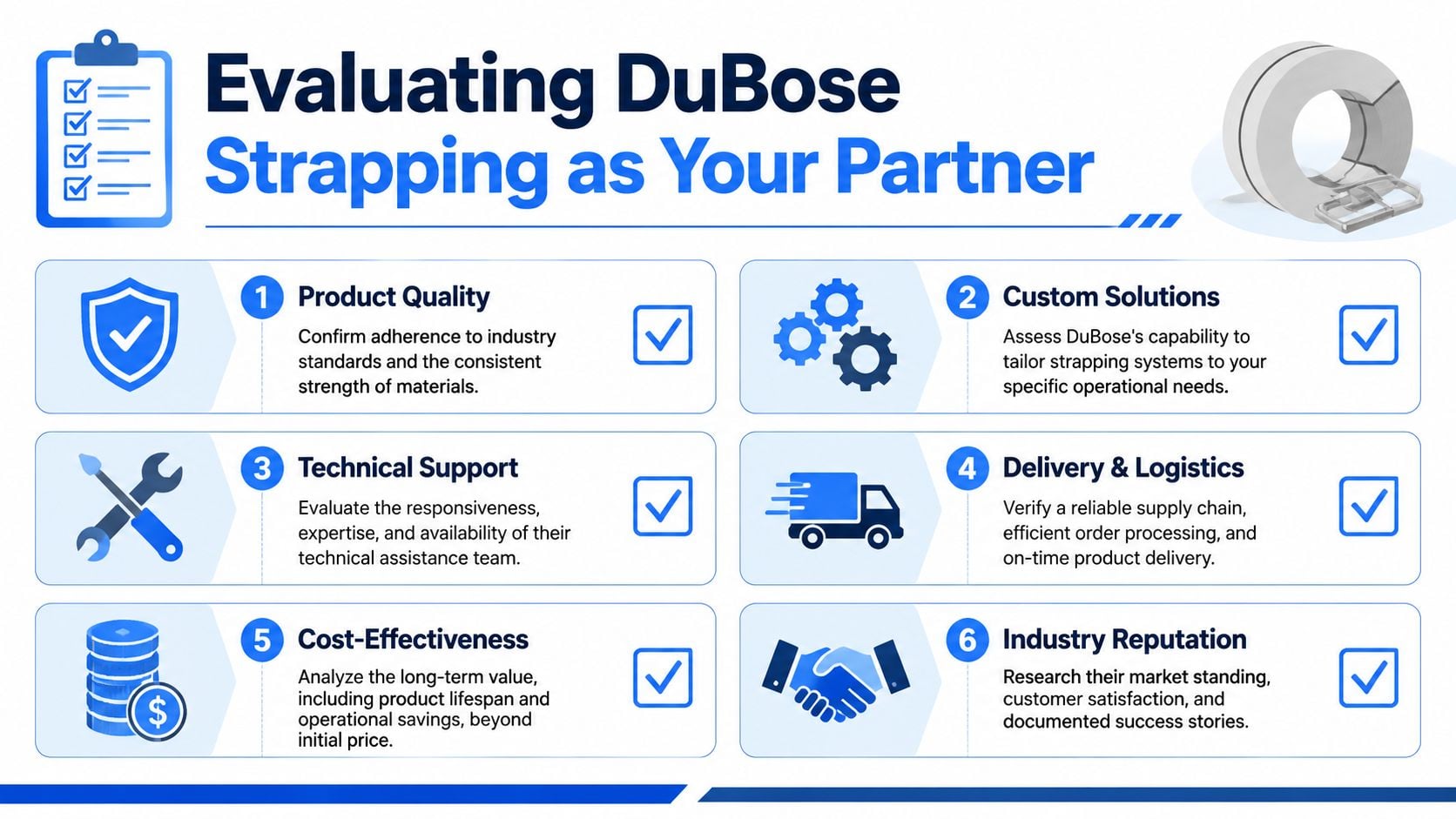
A delayed export load often exposes packaging decisions before anyone reviews the invoice. The strap fails, the unit shifts, the forwarder has to rework the shipment at the dock, and a low-cost supply item suddenly affects labor, transit time, and claim risk. That is the right context for evaluating DuBose. The question is not only whether the company can supply strapping. It is whether its products and support model reduce avoidable disruption across a shipper's network.
Start with operating fit
The first test is operational compatibility. A supplier may look strong on paper and still create friction if its lead times, technical support, or product range do not match the cargo profile a forwarder manages.
Buyers should examine four areas early:
- Manufacturing footprint: Domestic production can shorten replenishment cycles and make communication easier when shipments require fast packaging adjustments.
- Application range: A supplier that covers steel strapping, plastic strapping, tools, and protective accessories can support multiple load types without forcing procurement to manage several vendors.
- Support model: Technical input matters when shippers are choosing between manual, semi-automatic, and automated setups, or deciding how to secure difficult loads.
- Trade awareness: DuBose's import and export activity, noted earlier, suggests familiarity with the handling realities that affect internationally moving freight.
Forwarders that advise clients on vendor selection will recognize the same logic used in evaluating how to choose a freight forwarder. Procurement discipline should apply on both sides of the shipment. Service claims matter less than evidence that a supplier can perform under routine pressure.
The sustainability question buyers should press harder
DuBose introduced a sustainability program in 2024, but public materials still leave a gap for logistics buyers who need measurable business impact. On DuBose's sustainability program page, the company outlines its initiative, yet the public case is still light on quantified freight outcomes such as lower packaging waste, reduced handling burden, or clearer landed-cost effects.
That gap matters for forwarders. Shippers increasingly ask suppliers to support environmental goals, but procurement decisions usually move faster when sustainability claims connect to operating results. If DuBose can show that a material choice improves load consistency, reduces disposal volume, or lowers packaging-related rework, the conversation changes from branding to supply chain performance.
A similar standard applies in adjacent logistics services, including San Diego logistics support. Buyers need proof that a partner reduces operational risk, not just a broad statement of intent.
Buyer warning: Environmental positioning has more procurement value when a supplier can tie it to damage prevention, labor efficiency, or waste reduction.
Questions worth asking before onboarding
A serious evaluation should move past catalog breadth and into execution. These questions help separate a known industrial supplier from one that can support a forwarder's customers consistently.
- How does DuBose recommend matching steel and plastic systems to the actual weight, shape, and handling profile of our cargo?
- What implementation support is available for shippers shifting from manual tools to automated equipment?
- What lead times and reorder patterns should buyers expect for recurring supply?
- Can the company document outcomes related to damage reduction, handling consistency, or packaging waste?
- What measurable sustainability results can it show beyond high-level commitments?
Those questions matter because packaging suppliers influence freight performance indirectly but materially. DuBose appears to have the product depth and industrial profile buyers look for. The stronger procurement case depends on whether the company can document results with enough clarity to support a shipper, a forwarder, and a finance team at the same table.
Securing Your Supply Chain with the Right Partner
DuBose Strapping Inc. stands out because it combines manufacturing depth, a long operating history, and a product line that fits the practical demands of industrial cargo securement. For freight forwarders, that makes the company more than a packaging vendor. It makes it part of the upstream risk picture that shapes whether cargo arrives intact, is handled smoothly, and stays claim-free.
The strongest case for DuBose isn't just that it sells steel and plastic strapping. It's that the company appears positioned to support shippers with recurring, physical freight problems, especially where load stability matters as much as transport planning. That's relevant for lumber, manufacturing, warehousing, and other sectors where one weak packaging choice can disrupt an otherwise well-run move.
The final decision still depends on evidence. Buyers should weigh DuBose's market position against service responsiveness, product fit, and the depth of measurable performance support. That same discipline applies across logistics partnerships generally, whether you're reviewing security resources such as San Diego logistics support or strengthening compliance processes like denied party screening. The pattern is the same. Reliable supply chains come from choosing partners that reduce uncertainty, not just vendors that fill a purchase order.
For shippers and forwarders, cargo securement is a strategic decision wearing a procurement label. Treat it that way.
Coreties helps freight forwarders, carriers, and logistics sales teams turn customs data into qualified shipper leads, verified contacts, and personalized outreach. If you want sharper prospecting and more targeted conversations with companies that move freight, explore Coreties.