Your Complete Guide to Shipping with Aramex to Singapore
Shipping to Singapore with Aramex is a popular choice for a reason. It plugs you right into one of Southeast Asia's most important commercial centres, offering a solid mix of speed and value. Whether you're an e-commerce store, a B2B supplier, or just sending a personal parcel, Aramex provides a well-trodden path into this bustling […]
Shipping to Singapore with Aramex is a popular choice for a reason. It plugs you right into one of Southeast Asia's most important commercial centres, offering a solid mix of speed and value. Whether you're an e-commerce store, a B2B supplier, or just sending a personal parcel, Aramex provides a well-trodden path into this bustling market.
Your Roadmap to Shipping with Aramex to Singapore
Getting your head around international logistics can feel like trying to untangle a knot. You've got service options, customs forms, tracking numbers—each piece has to be in the right place at the right time. This guide is here to straighten all that out, giving you a clear, step-by-step roadmap for every Aramex shipment heading to Singapore. We'll break it all down so you can manage your shipping with confidence.
Think of it as building your knowledge from the ground up. We'll start with the basics, like figuring out which Aramex service is right for you, and then move on to the finer details. You won't just learn what to do, but also why it's important for a smooth delivery.
This guide is built for two different groups, with specific advice for each:
- For Individuals and Businesses: We'll walk you through the entire shipping journey. You'll get clear guidance on choosing the best service, getting your paperwork in order to prevent customs headaches, and keeping an eye on your shipment until it reaches its destination.
- For Freight Forwarders and Logistics Teams: We'll go a step further. We'll show you how to use powerful trade data tools, like Coreties, to spot companies already using Aramex to ship to Singapore. This is about turning raw data into real business leads.
By the time you're done here, you'll have a practical, complete picture of how Aramex works for Singapore-bound freight. Whether you're just sending one box or trying to win a new slice of the market, you'll have the know-how to make it happen. Let's start by looking at the different shipping services Aramex has on offer.
Choosing the Right Aramex Shipping Service to Singapore
Figuring out the best way to ship your goods to Singapore with Aramex shouldn't be a headache. It really comes down to balancing three things: how fast you need it there, what you're willing to spend, and the size and type of your shipment.
Think of it like planning a trip. You could take a private jet, a commercial flight, or a cross-country bus. Each has its place, and your choice depends on whether your priority is speed, budget, or something in between. Aramex’s services work in much the same way.
Once you get a feel for how speed, cost, and your shipment’s needs play off each other, picking the right service becomes second nature.
This quick decision tree lays out the options clearly, helping you see the best path forward whether you're sending a personal package or managing business logistics.
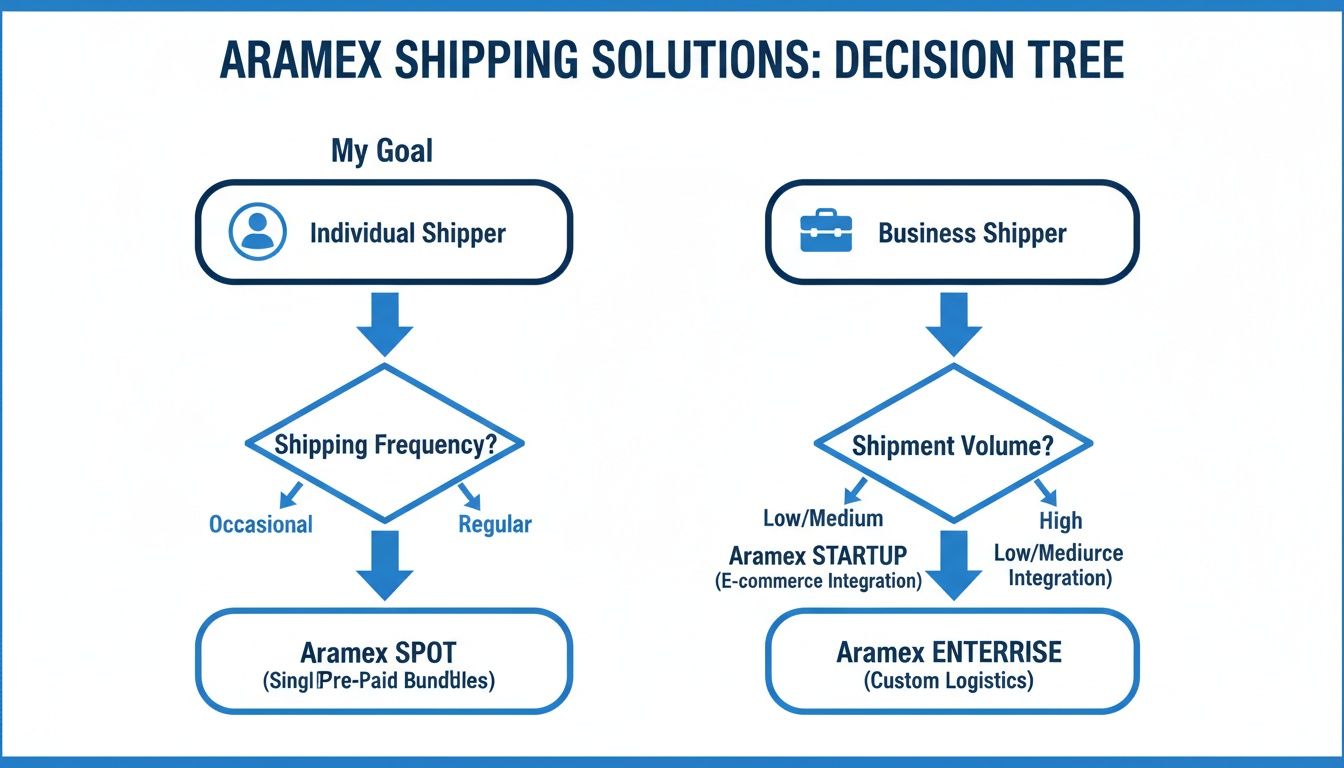
As you can see, it all starts with a simple question: are you an individual or a business? From there, your urgency and budget will point you to the most logical service.
Aramex Express: The Fastest Route
When time is money, Aramex Express is your go-to. This is the "private jet" option, built for speed and perfect for urgent documents, high-value items, or time-critical parcels. If it absolutely, positively has to get to Singapore tomorrow, this is the service you want.
We see it used all the time for things like:
- Urgent Business Documents: Last-minute contracts or legal papers that can’t wait.
- High-Value E-commerce Orders: When a customer has paid a premium for next-day delivery on luxury goods or electronics.
- Critical Replacement Parts: A vital machine component needed to keep a factory in Singapore from shutting down.
Of course, this level of speed comes at a price. Express is the premium option because your shipment gets top priority, often using direct flights and a fast-tracked customs process. You're paying for peace of mind.
Aramex Air Freight: A Balanced Approach
Aramex Air Freight is the workhorse of international shipping—the reliable commercial flight. It strikes an excellent balance between speed and cost, making it the most popular choice for a huge range of commercial goods. It's significantly faster than sending by sea but much more affordable than the all-out speed of Express.
This is the sweet spot for larger commercial shipments that need to arrive in a timely manner but don't quite justify the express price tag. Think of a retailer stocking up on popular products before a big sale, or a food importer moving perishable goods that need to hit the shelves quickly.
Aramex is a major player here. The company, Aramex PJSC, pulls in about AED 6.35 billion in annual revenue, and its Freight Forwarding division is a core part of that success. Their expertise in air, land, and ocean transport is especially strong on routes into Singapore, a market where B2B last-mile delivery holds a commanding 51% share. You can dig deeper into Aramex's financial performance for more context.
Key Takeaway: For most businesses, Air Freight is the default choice. It’s dependable and reasonably quick without breaking the bank, making it a cornerstone of efficient B2B logistics.
Aramex Ocean Freight: The Most Economical Option
Finally, we have Aramex Ocean Freight. This is your powerful, steady cargo ship. It’s built for large, heavy, or non-urgent shipments where keeping costs down is the number one priority. If you can plan ahead and are moving serious volume, nothing beats the value of ocean freight.
It’s the only practical option for:
- Bulk Raw Materials: Moving huge quantities of materials for manufacturing plants in Singapore.
- Large Stock Orders: Shipping full container loads of inventory to a distribution centre.
- Heavy Machinery or Equipment: Transporting items that are simply too big or heavy to fly.
The trade-off is time. A sea journey can take weeks, so it requires smart inventory management and long-term planning. But for businesses that can build that lead time into their supply chain, the cost savings are enormous and can dramatically lower the per-unit shipping cost. It’s the backbone of global trade for a reason.
Getting Through Singapore Customs Without a Hitch
Let’s be honest, international shipping can feel like navigating a maze. One wrong turn—usually a missing document—and your shipment is stuck. When you're sending a parcel with Aramex to Singapore, getting your paperwork in order isn't just a good idea; it's the only way to ensure a smooth, headache-free journey through customs.
Think of Aramex as your expert guide. They’ll act as your customs broker, taking all your documents and presenting them to the officials at Singapore Customs. All you need to do is make sure everything you give them is accurate and complete. That’s the foundation for a quick release.
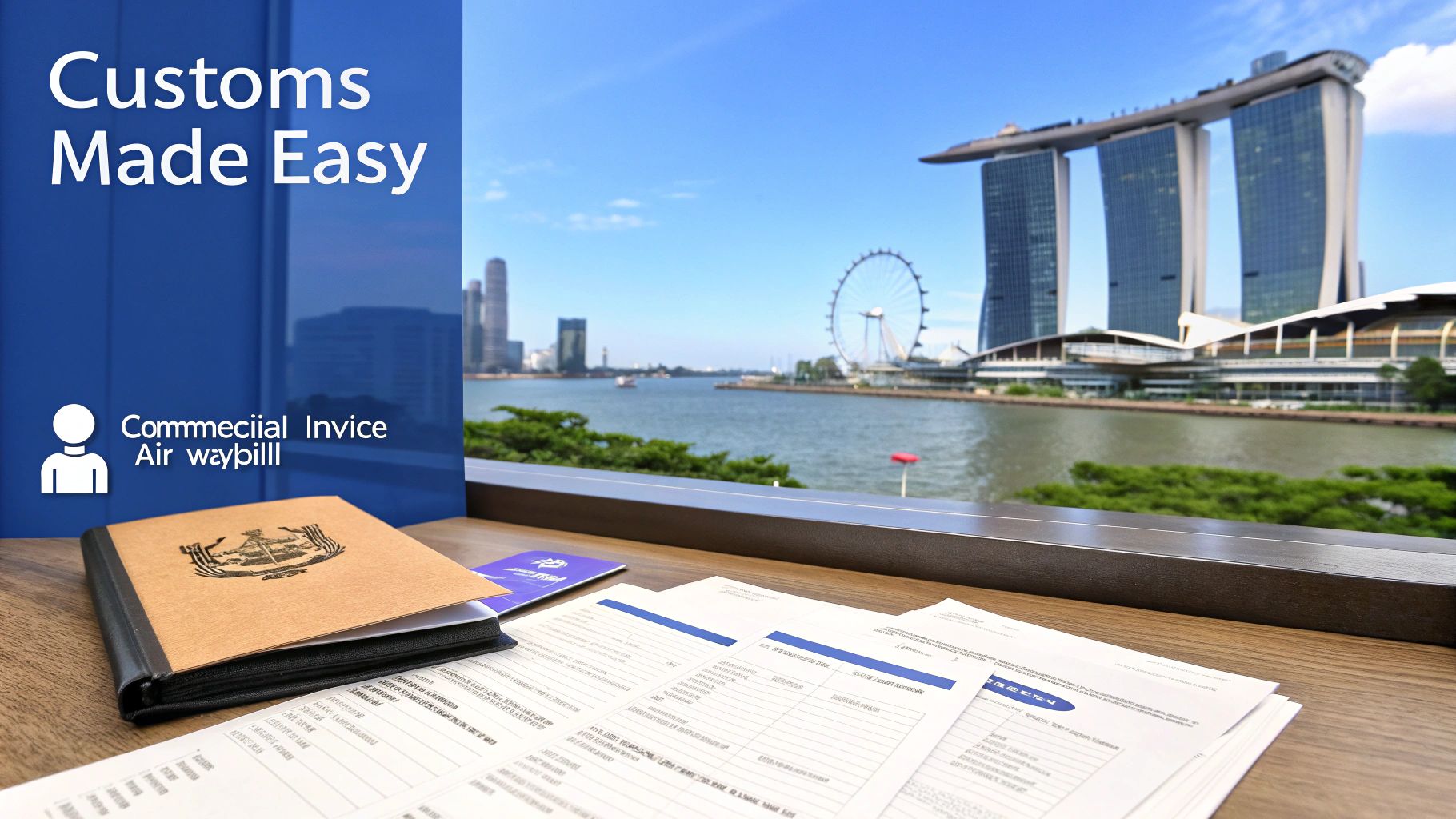
The Absolute Must-Have Paperwork
Before your shipment can even think about leaving the ground, there are a couple of documents you absolutely must have ready. These are the non-negotiables. They act as your shipment's passport, telling customs everything they need to know at a glance.
To get started, here's a quick look at the documents you'll almost always need for a smooth customs process in Singapore.
| Document | Purpose | Required For |
|---|---|---|
| Commercial Invoice | Details the contents, value, and parties involved. This is what customs uses to assess duties and GST. | All commercial shipments. |
| Air Waybill (AWB) | The contract and "ticket" for your shipment. It contains tracking info and transport details. | All air freight and express shipments. |
| Packing List | Provides a detailed breakdown of the package contents, weights, and dimensions. | Recommended for all shipments, especially multi-item consignments. |
| Import Permit/Licence | Special permission needed to import controlled or restricted goods (e.g., specific electronics, food items). | Only for controlled goods. |
Having these documents ready and filled out correctly from the start is the best way to avoid unnecessary hold-ups at the border.
Understanding Singapore's Import Rules: GST and De Minimis
Beyond the basics, you've got to know Singapore's specific import rules, especially when it comes to taxes. The big one to remember is the Goods and Services Tax (GST).
Singapore levies a 9% GST on the value of most goods coming into the country. But here’s the good news: there's a key threshold you should know about called the de minimis value.
What's the De Minimis Value? Put simply, if the total value of your shipment (that's the item cost plus shipping and insurance) is S$400 or less, it’s typically exempt from GST. This is a huge plus for anyone sending small e-commerce orders or personal gifts, as it means faster clearance and no surprise charges.
If your shipment's value tips over that S$400 mark, GST will be due before the goods can be released. Don't worry, Aramex usually handles the payment for you and then includes the cost in your final invoice, which keeps things simple.
The Critical Role of HS Codes
Every single product, from a pair of sneakers to a circuit board, has a unique classification number called a Harmonised System (HS) code. This universal code tells customs officers exactly what's inside your box.
Why does this matter so much? Because using the right HS code is essential for calculating the correct taxes and flagging any potential import restrictions.
Get the code wrong, and you could face:
- Wrong Tax Bills: You might end up overpaying or, worse, underpaying, which creates a whole new set of problems.
- Customs Delays: Officials will put your shipment on hold while they figure out what it actually is, adding days to the delivery time.
- Possible Fines: Make the same mistake too many times, and you could be looking at financial penalties.
Nailing down the correct HS codes is a step many newcomers miss, but it's a game-changer. For a deeper look, check out our guide on how to find the right Singapore customs HS codes. Taking a few extra minutes to get this right will make your entire Aramex to Singapore experience go that much more smoothly.
Keeping Tabs on Your Shipment and Handling Hiccups
Once your package is on its way to Singapore with Aramex, you’ll naturally want to know where it is. Thankfully, keeping an eye on your shipment’s journey is straightforward. Aramex’s tracking system is designed to give you clear, real-time updates, taking the guesswork out of the delivery process.
It all starts the moment Aramex picks up your parcel. You'll get a unique tracking number—this is your golden ticket to following its progress. Just pop that number into the Aramex website or their mobile app to see exactly where your shipment is at any given moment.
Making Sense of Tracking Updates
As your package makes its way across the globe, you'll see its status change. Most of the updates are pretty obvious, but a few can be a bit cryptic. Knowing what they mean helps you manage expectations and keep your customer in the loop.
Here’s a quick rundown of the most common statuses you'll encounter:
- Shipment Information Received: This just means the digital paperwork is in. Aramex knows a shipment is coming, but they haven't physically got their hands on your package yet.
- In Transit: Your parcel is officially on the move. It could be on a flight or in a truck, making its way between Aramex facilities.
- Arrived at Sort Facility: The package has landed at a major hub, like the one at Changi Airport. Here, it gets sorted and prepped for the next leg of its journey.
- Customs Clearance in Progress: This is a big one. Singapore Customs is currently reviewing your shipment and its paperwork. If everything is in order, this part is usually a breeze.
- Out for Delivery: The final countdown! Your package is loaded onto a local delivery van and is en route to its final address in Singapore.
Expert Tip: The "Customs Clearance in Progress" stage is where things can get held up. The single best way to avoid delays here is to double-check that your commercial invoice is flawless and the HS codes are spot on before you ship.
What to Do When a Shipment Goes Sideways
Let's be realistic—sometimes things don't go as planned. A package might get damaged in transit, or in very rare cases, go missing. It's frustrating, but knowing how to handle it can make a world of difference.
If you find yourself in this situation, the key is to act fast. Aramex has a clear process for filing claims, and having all your ducks in a row will make it much smoother.
Here’s what you need to do to file a claim:
- Contact Aramex Right Away: The moment you notice a problem, get in touch with Aramex customer service. There are usually tight deadlines for filing a claim, so don't wait.
- Collect Your Paperwork: You'll need the original Air Waybill (AWB), the commercial invoice (which proves the item's value), and the tracking number.
- Take Pictures (For Damage): If the item is damaged, photos are non-negotiable. Take clear pictures of the damaged product and the packaging from every angle. This is your strongest piece of evidence.
- Complete the Claim Form: Fill out the official Aramex claim form with as much detail as possible. Be precise about the damage or loss.
By following these steps, you’re building a solid case. An organised, well-documented claim helps the Aramex team process it quickly, which means a faster resolution for you.
Tapping Into Singapore's Red-Hot E-commerce Scene
Singapore is far more than just a global logistics hub—it's an absolute goldmine for e-commerce sellers. To really succeed here, you need to understand what makes this market tick. With its incredibly high digital adoption, strong consumer spending power, and a real hunger for international goods, Singapore is the perfect storm for cross-border trade. For any business shipping with Aramex to Singapore, this isn't just another delivery point; it's a strategic growth opportunity waiting to be seized.
The demand is explosive because the population is one of the most connected and tech-savvy on the planet. When almost everyone is online and comfortable buying from overseas, the usual barriers for international brands practically disappear. This opens a direct channel to customers actively searching for unique products they can't find on their local high street.
Why Singaporean Shoppers Look Abroad
Let's be clear: Singaporean consumers are sharp. They're on the hunt for quality, variety, and good value, and they have no hesitation about shopping globally to get it. This mindset is a huge advantage for international sellers offering products that stand out from the local crowd.
A few key factors are driving this trend:
- A World of Choice: Shoppers can get their hands on products, styles, and brands simply not available in local brick-and-mortar shops.
- The Quality Perception: Many consumers link international brands with higher quality, particularly in popular categories like electronics, fashion, and beauty products.
- Smart Pricing: Even after factoring in shipping, direct-to-consumer models can often beat the prices found at local retailers.
In this environment, fast and reliable shipping isn't just a nice-to-have; it's a critical competitive edge.
How Aramex Delivers for E-commerce
This is where a solid logistics partner like Aramex becomes absolutely indispensable. The modern Singaporean online shopper has high expectations—they want their orders fast, they want to track them every step of the way, and they expect zero drama. A single bad delivery experience can completely undo all the hard work you put into a great product.
Aramex's service offerings are well-tuned to meet these very demands. Their Express option is perfect for businesses that want to offer premium, next-day delivery—a surefire way to build serious customer loyalty. For more routine shipments, their standard services provide a dependable solution that won't break the bank.
Beyond speed, Aramex’s detailed tracking and efficient last-mile delivery network keep customers in the loop and ensure their packages arrive without a hitch. That seamless final step is vital for building the trust that leads to repeat business. It's no wonder that many of the top import and export companies in Singapore make strong logistics partnerships a top priority.
Singapore is a major strategic hotspot for Aramex. It ranks as its 6th largest export destination from London Heathrow alone, a clear sign of the immense volume flowing through this cross-border freight lane.
This focus is right on the money. With 87% of Singapore's population being active digital users and over half of them buying goods from abroad, the consumer shift online is massive and undeniable. Anchored by Singapore, the broader Southeast Asia e-commerce market is now worth over USD 4.9 billion, pulling in merchants from high-demand sectors like apparel, electronics, and beauty. You can dig deeper into this trend on Aramex's official blog. This powerful combination of consumer demand and established logistics channels makes the Aramex to Singapore route a vital artery for modern e-commerce.
How Freight Teams Can Find and Win Aramex Shippers
Okay, so we've covered the ins and outs of shipping with Aramex to Singapore. But for freight forwarders and logistics sales teams, the real question is: how do you tap into this busy trade lane and find new clients?
The old way of cold calling is a grind. A better approach is to use trade data to find companies already using the Aramex to Singapore route. It's about working smarter, not harder.
This is where a tool like Coreties really shines. It helps you shift from throwing darts in the dark to a focused, data-backed sales strategy. You can pinpoint high-value shippers and craft an outreach that actually resonates because it's based on what they're already doing.
Zeroing In on the Right Leads
Hunting for new business can feel like searching for a needle in a haystack. Coreties completely changes the game by giving you the tools to filter global customs data. You can instantly pull up a list of companies that are actively shipping goods into Singapore, giving you a warm, pre-qualified list to work from.
Think about how much time you'd save by narrowing your search to prospects that are a perfect fit. This lets you focus your energy where it's most likely to pay off.
Here’s how you can slice and dice the data to find your ideal clients:
- By Carrier: Filter for companies that have recently used Aramex for their shipments to Singapore. Simple.
- By Geography: Target shippers in a specific city, state, or country that matches your company's key service areas.
- By Commodity: Focus on businesses shipping specific types of goods, letting you lead with your team's unique expertise.
The screenshot below from the Coreties platform shows just how easy it is to apply these filters and get a targeted list of potential customers.
This visual approach makes it a breeze to layer different filters, quickly building a list of qualified companies that fit your ideal customer profile.
Turning Data Into Meaningful Conversations
Finding a company name is just the start. The real challenge is getting in touch with the right person and having a conversation that adds real value. Coreties helps here too, giving you much more than just a list of names.
The platform links directly with professional networks like LinkedIn, so you can easily find the contact details for logistics managers, supply chain directors, or heads of procurement. This ensures your pitch actually lands in the right inbox. Plus, knowing exactly what a company ships is a huge advantage. You can learn more about how to do this by reading our guide on using the HS code filter for super-targeted prospecting.
The Coreties Advantage: When you combine customs data with verified contact info, your outreach becomes incredibly personal. Instead of a generic "Can we ship for you?" email, you can open with something like, "I saw you recently shipped product X to Singapore with Aramex, and I think we can offer you a more competitive solution."
This data-first approach immediately positions you as a knowledgeable partner, not just another salesperson. It builds trust from the first touchpoint and dramatically increases your odds of starting a real conversation.
This kind of precise targeting is especially powerful in a market like Singapore, a true logistics powerhouse in Southeast Asia. The local last-mile delivery market is expected to hit a staggering USD 23.07 billion by 2030, growing at a rapid 12.19% clip.
This boom highlights Singapore's vital role as a logistics hub, where platforms like Coreties help forwarders connect with high-volume importers on key routes. For freight teams, this isn't just a number—it's a clear signal of massive opportunity waiting to be seized.
Your Top Questions Answered
Shipping internationally always comes with a few questions. To make things easier, we've put together some quick, straightforward answers to the most common queries we see about sending parcels to Singapore with Aramex.
Think of this as your go-to cheat sheet for everything from delivery times and costs to customs and tracking.
How Long Does Aramex Shipping to Singapore Take?
This is probably the first question on everyone's mind. The short answer is: it really depends on which Aramex service you pick.
- Aramex Express: If you need it there yesterday, this is your best bet. It's built for speed, with parcels typically arriving in just 1-3 business days.
- Aramex Air Freight: This option strikes a great balance between speed and cost. You’re usually looking at a delivery window of about 3-7 business days.
- Aramex Ocean Freight: For bigger, less urgent shipments, ocean freight is the most cost-effective route. Patience is key here, as it can take anywhere from 20-30 days, sometimes more, depending on where it’s coming from.
Keep in mind, these are solid estimates, but things like customs processing or the specific country of origin can always add a day or two.
How Are Aramex Shipping Costs Calculated?
Aramex calculates your shipping cost based on what they call "chargeable weight." This isn't just about how heavy your box is; it's also about how much space it takes up.
They look at two things: the actual, physical weight and the volumetric weight. Whichever is higher becomes the chargeable weight.
So, What's Volumetric Weight?
It’s a way of measuring a parcel’s density. Light, bulky items take up more space on a plane than small, heavy ones. The formula is usually (Length x Width x Height in cm) / 5000. It ensures the price fairly reflects the space your package occupies.
Besides chargeable weight, the final price tag is also influenced by:
- The service you choose (Express will always cost more than standard freight).
- The distance it’s travelling (origin and destination).
- Any extras you add on, like insurance or special handling for fragile goods.
What Items Are Restricted for Import into Singapore?
Every country has its own set of rules, and Singapore is no different. They have a list of items that are either completely prohibited or restricted, meaning they need a special permit to enter.
While Aramex has its own list of things they won't carry, you also need to be mindful of Singapore's specific regulations.
Some common restricted items include:
- Chewing gum (the only exception is for oral dental or medicated types).
- Certain types of telecommunication equipment.
- Specific publications, videos, and software.
- Controlled drugs and psychotropic substances.
The golden rule is to always double-check the official Singapore Customs website before you even pack your box. It can save you a world of trouble down the line.
How Are Duties and Taxes Handled for My Shipment?
In Singapore, if the value of your shipment is over the S$400 threshold (known as the de minimis value), it will be subject to a Goods and Services Tax (GST) of 9%.
The good news is that Aramex usually handles this for you. They’ll calculate the GST based on the value you declared on the commercial invoice and pay it upfront to Singapore Customs. This is a huge help because it prevents your parcel from getting stuck in customs limbo. They simply bill the tax amount back to you later.
Ready to turn global trade data into your next big client? With Coreties, you can instantly find companies shipping on the Aramex to Singapore lane, access key decision-maker contacts, and craft data-driven outreach that gets results. Stop cold calling and start having smarter conversations. Discover your next customer at https://coreties.com.