Secure Business with Pacific Blends Ltd: 2026 Logistics
You open a company record expecting another small regional food manufacturer. Then one detail changes the whole account. The shipper is relatively small by headcount, but it sits inside a supply chain that reaches the Bering Sea, Vancouver-area port infrastructure, and food manufacturers across North America and the Pacific Rim. That's the kind of prospect […]
You open a company record expecting another small regional food manufacturer. Then one detail changes the whole account. The shipper is relatively small by headcount, but it sits inside a supply chain that reaches the Bering Sea, Vancouver-area port infrastructure, and food manufacturers across North America and the Pacific Rim.
That's the kind of prospect many logistics teams miss. They sort by size, not by position in the network.
Pacific Blends Ltd deserves the opposite treatment. It's the kind of account where niche market control, product complexity, and acquisition-led expansion can create freight opportunities that are larger than the company's public profile suggests. If you sell forwarding, carrier capacity, customs-adjacent visibility, or multimodal planning, this isn't a company to file under “too small to matter.” It's one to study carefully and approach with a point of view.
From Niche Player to High-Value Prospect
Most sales teams spend too much time on obvious targets. They chase large food manufacturers with crowded vendor rosters and entrenched transportation partners. Meanwhile, a company like Pacific Blends can sit in plain sight.
Publicly, it looks compact. Operationally, it's far more consequential. Pacific Blends is a family-owned custom-blending provider founded in 2002 and headquartered in Port Coquitlam, British Columbia, with over 40 years of experience noted through its industry background and membership references. It serves customers across North America and the Pacific Rim in seafood, meat, poultry, dairy, processed foods, and snack foods, while holding a particularly strong position in surimi cryoprotectants and custom dry ingredient blends, according to Pacific Blends company information.
That combination matters for freight sales because network importance beats company size when the shipper handles products that are operationally sensitive and tied to industrial production schedules. Pacific Blends isn't just moving finished pouches. It's supporting manufacturers that use outsourced dry blending to remove blending steps from their own plants.
Practical rule: When a shipper helps manufacturers remove production steps, transportation reliability becomes part of the shipper's value proposition.
That's why this account is better understood through benchmarking logic than through standard prospect scoring. A useful lens comes from industry benchmarking methods for supply-chain prospecting. The right comparison set isn't “Canadian SME manufacturers.” It's “specialty ingredient suppliers with concentrated category influence, export exposure, and workflow-critical products.”
For a logistics seller, that changes the playbook. You're not pitching generic capacity. You're diagnosing where a specialized ingredient producer may need tighter inbound coordination, cleaner outbound execution, and better support when new product lines are folded into the operation.
Who Is Pacific Blends Ltd Really
A standard company summary misses the point. Pacific Blends should be read like an internal account brief, where every business fact implies a logistics consequence.
The company profile that matters to sales
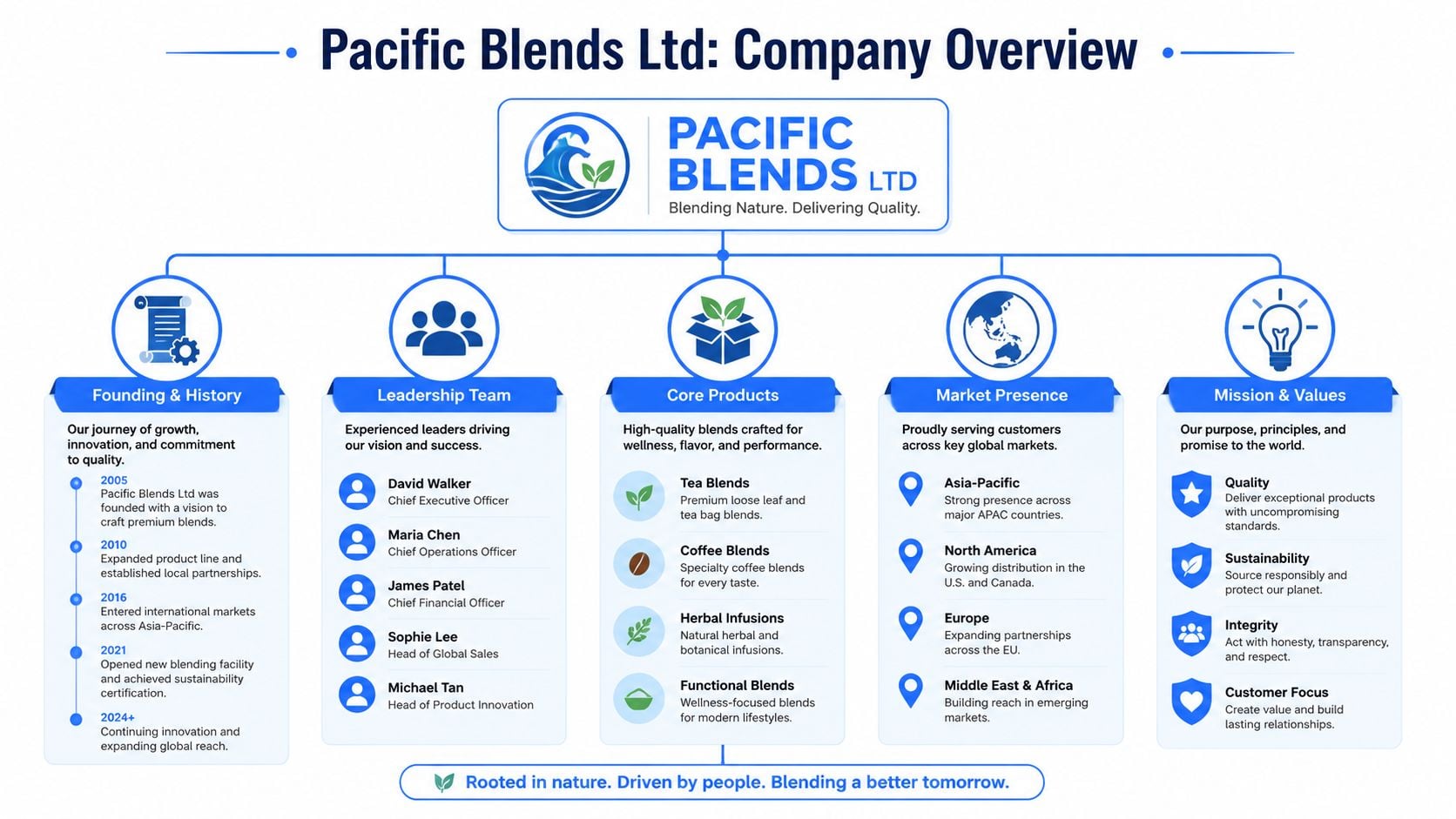
Pacific Blends Ltd was founded in 2002 and is headquartered in Port Coquitlam, British Columbia. Public importer data describes it as one of the world's largest producers of surimi cryoprotectants, supplying nearly all factory fishing vessels processing Alaskan Pollock in the Bering Sea. The same source reports revenue of under $5 million and an employee count of 11 to 50, which makes it a compact organization with outsized category relevance, as shown in this Pacific Blends importer profile.
That's the first signal logistics teams should pay attention to. A company doesn't need a huge payroll to create meaningful freight demand if it occupies a bottleneck position in a specialized supply chain.
Its core business is custom dry ingredient blending. Pacific Blends serves seafood, meat, poultry, dairy, processed food, and snack food customers. The commercial logic behind that offering is straightforward. Manufacturers can buy a single unitized blend rather than stage, measure, and combine multiple dry inputs in-house.
Why the business model raises logistics stakes
This isn't just a food ingredients company. It's a workflow simplifier for downstream manufacturers. When a supplier takes complexity out of a customer's production line, that supplier's own execution has to be tight.
If Pacific Blends ships late, the customer doesn't just receive ingredients late. The customer loses the time savings and process simplification they outsourced to Pacific Blends in the first place. That creates a very different service expectation than standard commodity freight.
Here's the account profile in a sales-friendly format:
| Attribute | Detail |
|---|---|
| Company | Pacific Blends Ltd |
| Ownership model | Family-owned private manufacturer |
| Founded | 2002 |
| Headquarters | Port Coquitlam, British Columbia |
| Primary specialization | Custom dry ingredient blends |
| Notable market position | One of the world's largest producers of surimi cryoprotectants |
| Supply relevance | Supplies nearly all factory fishing vessels processing Alaskan Pollock in the Bering Sea |
| Reported scale | Revenue under $5 million |
| Reported workforce | 11 to 50 employees |
| Served sectors | Seafood, meat, poultry, dairy, processed foods, snack foods |
| Commercial value proposition | Unitized custom blends that remove dry blending steps for manufacturers |
What their history suggests about account behavior
Pacific Blends didn't stay static. The company expanded its presence through acquisitions, including the November 2011 acquisition of Renaissance Blends' business assets, which brought Renaissance's product line into the Pacific Blends brand. It later acquired the Vegelatum® brand, extending its position into cosmetic ingredients, according to Pacific Blends growth news.
That history tells you something useful before you ever contact the company. This is a business that grows by adding lines, integrating products, and broadening the commercial footprint without abandoning its custom-blending core.
A shipper that grows through acquisition usually inherits complexity faster than it redesigns transportation around it.
For freight providers, that means the primary opportunity may not be “move current orders.” It may be “support integration.” New SKUs, altered sourcing needs, changed customer mixes, and fresh packaging or handling requirements often appear before transportation processes are fully harmonized.
Mapping Their Global Supply Chain Footprint
If you want to build a lane strategy around Pacific Blends, start with what the company makes, where it sits, and who it serves. That gives you a working map of its supply chain before you touch shipment data.
Start with the product and work backward
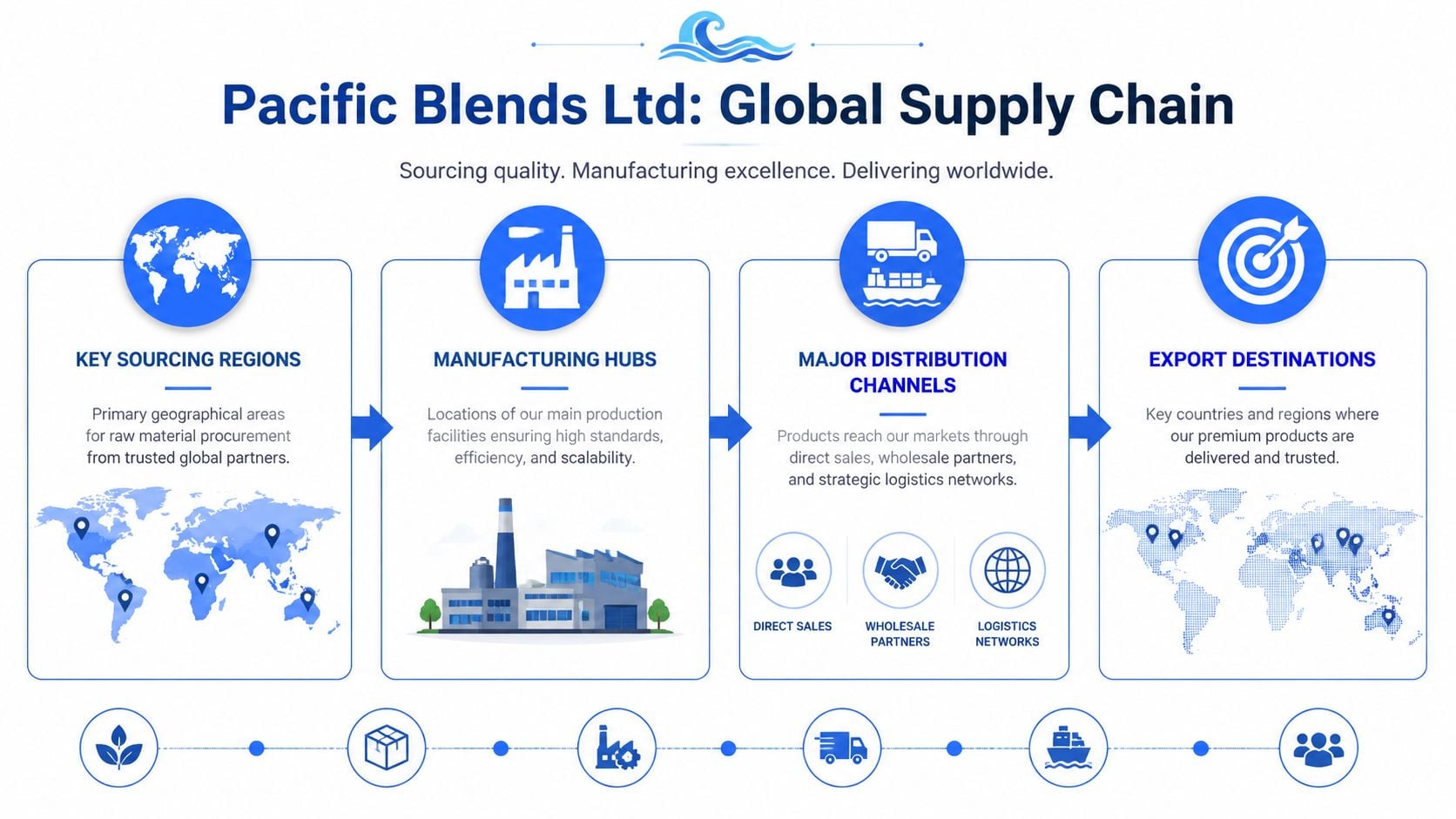
Pacific Blends' unitized custom blending technology consolidates multiple dry ingredients into a single pouch. The company says this reduces storage volumes and shortens storage time for customers, while its location near major Vancouver ports and a sugar refinery supports cost-effective delivery to North American and Pacific Rim clients through its company overview.
That statement gives a logistics seller three immediate hypotheses.
- Inbound ingredient complexity is real. A company that combines multiple dry ingredients into one pouch needs coordinated inbound material availability.
- Outbound service is broader than local distribution. Pacific Rim and North American reach implies a mix of domestic and international flows.
- Facility location is strategic, not incidental. Port proximity usually means ocean connectivity matters to the operating model.
Build the likely lane map
A practical lane map for Pacific Blends probably includes several distinct flow types.
- Inbound raw materials: Dry ingredients arriving for blending, potentially from domestic and international suppliers.
- Marine-linked seafood ingredient support: Commercial relationships tied to the Alaskan Pollock and Bering Sea ecosystem.
- Outbound finished blends to food manufacturers: Likely shipment patterns into production hubs where customers need ingredients on predictable schedules.
- Pacific Rim export flows: Ocean-linked movement where transit planning and documentation discipline matter more than simple truck dispatch.
If you work in forwarding or NVOCC sales, broader reading on mastering global supply chain strategies helps sharpen your pitch. The point isn't theory. It's knowing how port access, supplier concentration, and customer production timing interact inside a specialized ingredient business.
What to look for operationally
The key isn't just that Pacific Blends moves goods globally. It's that its product format shifts complexity from the customer to Pacific Blends.
That means a logistics partner should examine:
| Supply chain question | Why it matters for Pacific Blends |
|---|---|
| Are ingredients sourced from multiple origins? | Multi-origin inputs raise coordination risk before blending begins |
| Are customer orders tied to plant schedules? | Delays can interrupt manufacturing workflows downstream |
| Do export orders move through Vancouver-area gateways? | Port choice affects lead time, drayage planning, and carrier options |
| Are there mixed product requirements across sectors? | Food-sector diversity can produce different service expectations by customer type |
A useful companion lens is studying how to identify a company that imports. Even before you validate exact entries, the import-export logic around Pacific Blends is already visible from its product design, geography, and customer base.
The best freight opportunities often sit where a shipper promises simplicity to its customers but carries hidden complexity inside its own operation.
How to Verify Their Shipping Activity
Smart prospecting starts with inference, but it can't end there. Before your team writes the first outreach email, it needs evidence that Pacific Blends is moving freight in the patterns you suspect.
That verification step changes the conversation. Instead of saying, “We help food ingredient companies,” you can say, “We noticed your shipping pattern suggests recurring pressure around specific ports, handoffs, or lane structures.” That's a different level of credibility.
What verification should actually answer
For an account like Pacific Blends, shipment verification isn't about collecting trivia. It's about proving whether the commercial story matches the physical network.
Use customs and trade-activity tools to answer questions such as:
- Which ports appear repeatedly: Repetition usually points to habitual trade lanes rather than one-off transactions.
- What shipment descriptions reveal: Product language can help separate ingredient inflows from blended outbound goods.
- How frequently shipments occur: Consistency tells you whether to frame the account as project-based or recurring.
- Which parties appear around the shipment: Related entities, consignees, or suppliers can reveal where decisions may be influenced.
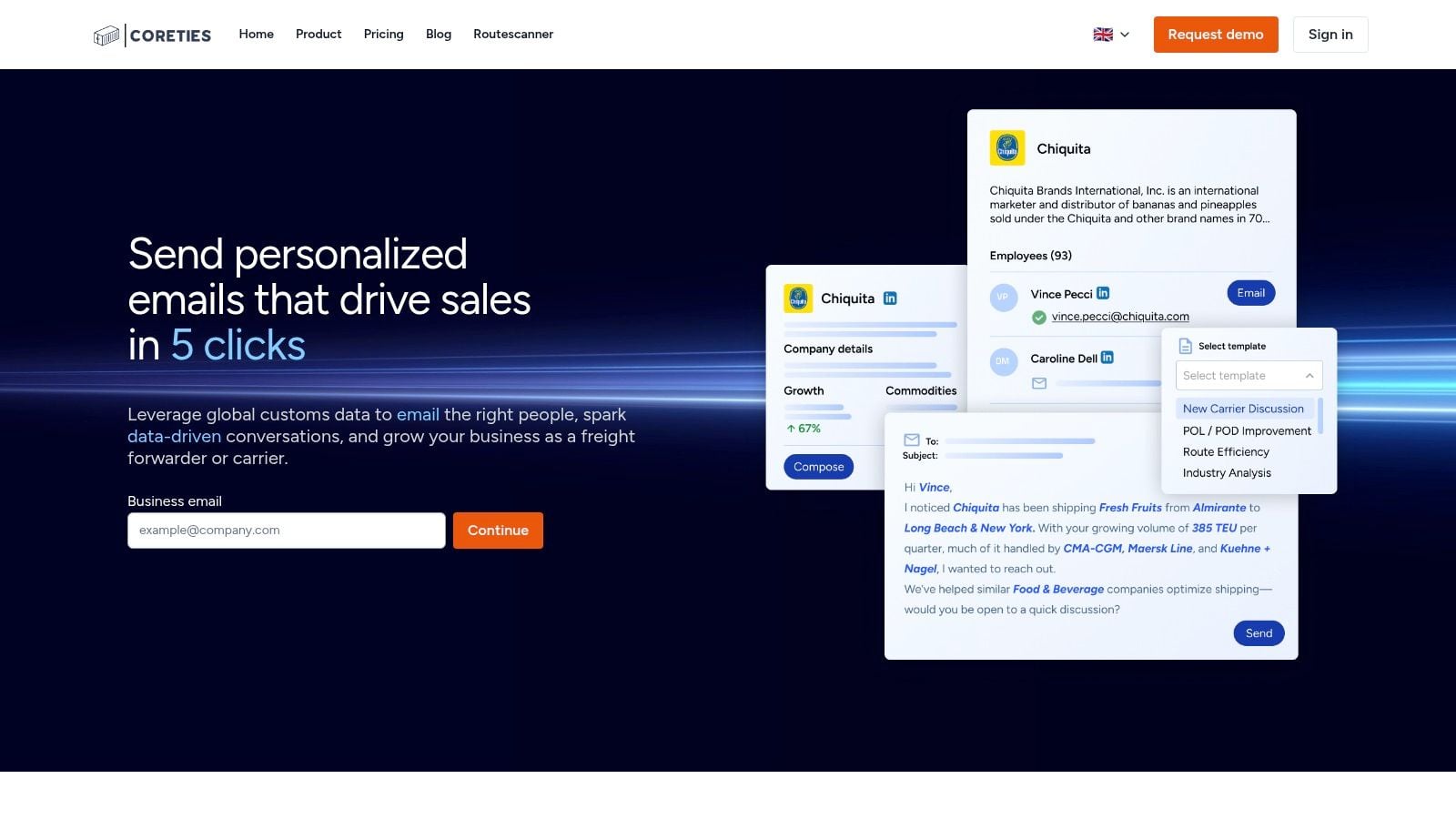
Here's the kind of workflow many sales teams benefit from seeing visually:
What to pull from the records
For a company with Pacific Blends' profile, customs records and related shipment tools can help your team isolate:
- Port pairs that show likely core international lanes.
- Consistent routing patterns that may indicate incumbent forwarder relationships.
- Packaging and shipment format clues that suggest whether cargo moves as palletized dry ingredients, packaged blends, or broader industrial food components.
- Seasonality signals, if they exist, that might tie back to customer production cycles or seafood-related timing.
This is also where shipment visibility language matters. If your prospect asks why your team is focused on operational transparency, it helps to ground that in practical tools rather than buzzwords. A concise explainer on what is a freight tracking system is useful background because specialized ingredient shippers often care less about flashy dashboards and more about dependable milestone visibility.
Why verification changes the sales motion
Without data, reps tend to send feature-based outreach. They promise good service, flexible capacity, or competitive pricing. Every carrier and forwarder says the same thing.
With validated shipping activity, you can do something more specific:
Don't lead with your network. Lead with what their shipment pattern suggests they need fixed, protected, or simplified.
That's especially important for a company that supports customer manufacturing workflows. If you can confirm recurring gateways, likely import dependencies, or export routines, your message can focus on schedule protection, supplier coordination, and lane resilience instead of commodity transport language.
Actionable Outreach Angles That Win Business
Most logistics outreach to food manufacturers is forgettable because it's too broad. Pacific Blends won't respond to generic claims about “excellent service” or “global reach.” The account calls for a sharper angle tied to hidden commercial pressure.
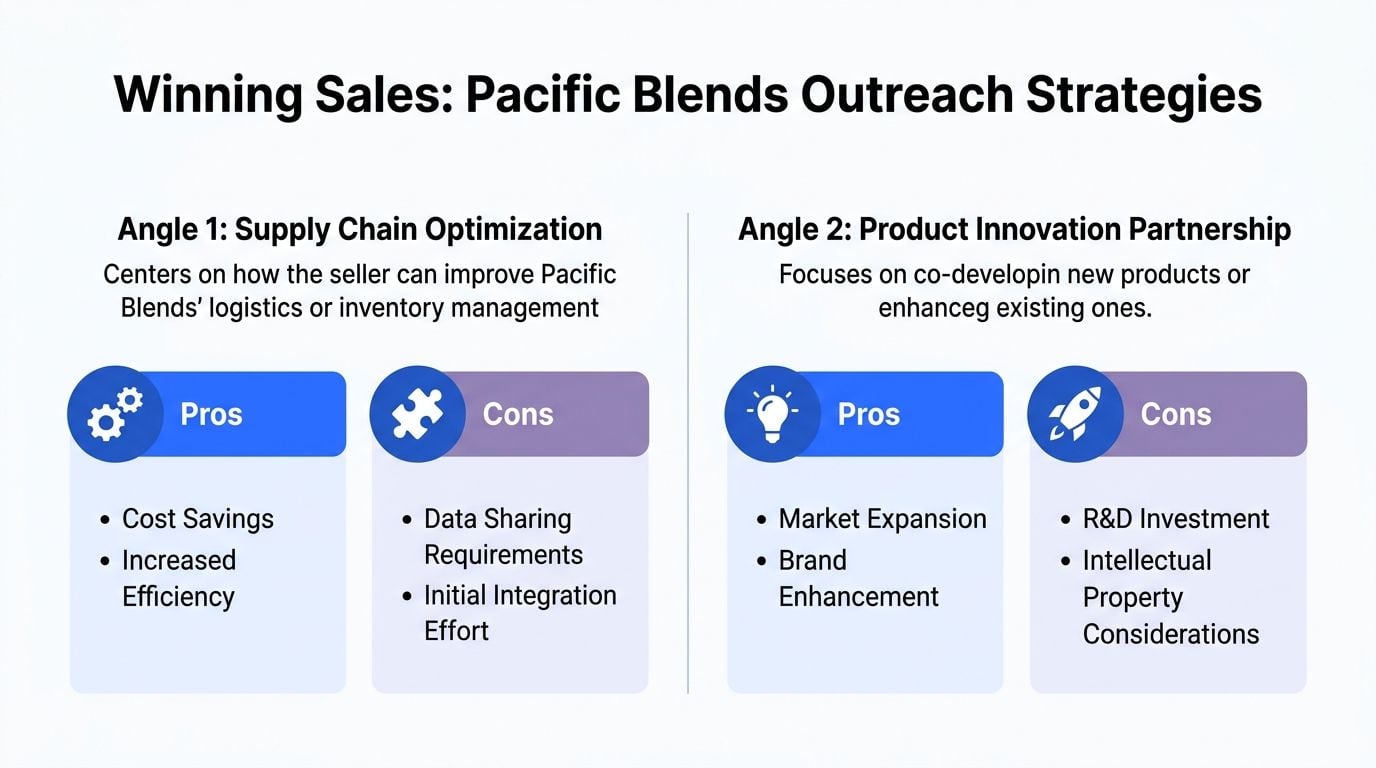
Angle one, position logistics as cost protection
A frequently overlooked sales angle sits inside Pacific Blends' role in surimi. Public export-catalogue commentary notes that surimi prices rose 18% in 2024 due to supply constraints, while Pacific Blends' role as a top cryoprotectant manufacturer creates supply-chain stability that can buffer food manufacturers against inflation, according to the BC agrifood export catalogue entry on Pacific Blends.
That matters because it reframes the logistics sale. You're not offering transportation as a back-end service. You're offering transportation as a support system for a supplier whose value includes helping customers manage instability.
A weak outreach message says, “We can handle your imports and exports.”
A stronger one says, “Your position in cryoprotectants makes continuity part of your customer promise. We help specialized suppliers protect inbound ingredient flow and outbound fulfillment when volatility hits upstream protein markets.”
That's a very different conversation.
How to frame the message
Use language that connects transport execution to commercial protection:
- Mention continuity: Pacific Blends supports a mission-critical product category.
- Talk about inventory timing, not just rates: Ingredient businesses lose value when timing breaks.
- Offer lane review: Propose a review of where disruptions could compromise customer delivery promises.
Sales insight: When a supplier helps its buyers manage inflation pressure, transportation reliability becomes part of the buyer's cost-control story.
Angle two, treat Vegelatum as a network expansion problem
Pacific Blends' acquisition of the Vegelatum® brand opened a second strategic angle. The move expanded the company into cosmetic ingredients, as noted in the earlier acquisition coverage. Public commentary around that acquisition also points to a broader transparency trend in beauty products and states that 32% of global beauty consumers seek food-derived ingredients, according to the Vegelatum acquisition announcement.
Don't oversell the statistic. Use it to support one simple conclusion. Pacific Blends now touches a category with a different buyer profile, potentially different packaging expectations, and potentially different distribution rhythms than its food-manufacturing base.
That creates a freight discussion most providers won't raise. The issue isn't only “Can you ship cosmetic ingredients?” The issue is whether Pacific Blends now needs a transportation setup that can support two commercial motions at once.
One side of the business serves industrial food manufacturing. The other may require a different cadence, different consignee base, or different compliance-adjacent handling expectations.
Outreach idea by persona
If you reach operations leadership, stress integration risk.
If you reach commercial leadership, stress market expansion readiness.
If you reach procurement or logistics, stress handoff clarity across mixed product lines.
You can also tighten the writing itself by borrowing principles from guides on crafting effective cold emails. The best note to Pacific Blends won't be long. It will show that you understand the pressure created when a blending business adds a new brand and category.
A practical internal prep step is identifying who owns these conversations. Teams that need help locating the right contacts can use guidance on how to find decision-makers before launching outreach.
What not to say
Avoid these common mistakes:
| Weak pitch | Why it fails |
|---|---|
| “We work with many food companies” | Too broad. Pacific Blends isn't a generic food shipper |
| “We offer cost savings” | Unprovable without lane context |
| “We can support your growth” | Vague and interchangeable |
| “We saw you acquired a brand” | Observational, but not insightful |
Better language ties your service to one of two real issues: protecting a volatility-sensitive supply role or integrating a newly expanded product portfolio without creating logistics friction.
Your Go-to-Market Checklist for Pacific Blends
The account is attractive, but it won't close on interest alone. Your team needs a disciplined plan that turns company intelligence into a contact strategy, a lane hypothesis, and a first conversation worth taking.
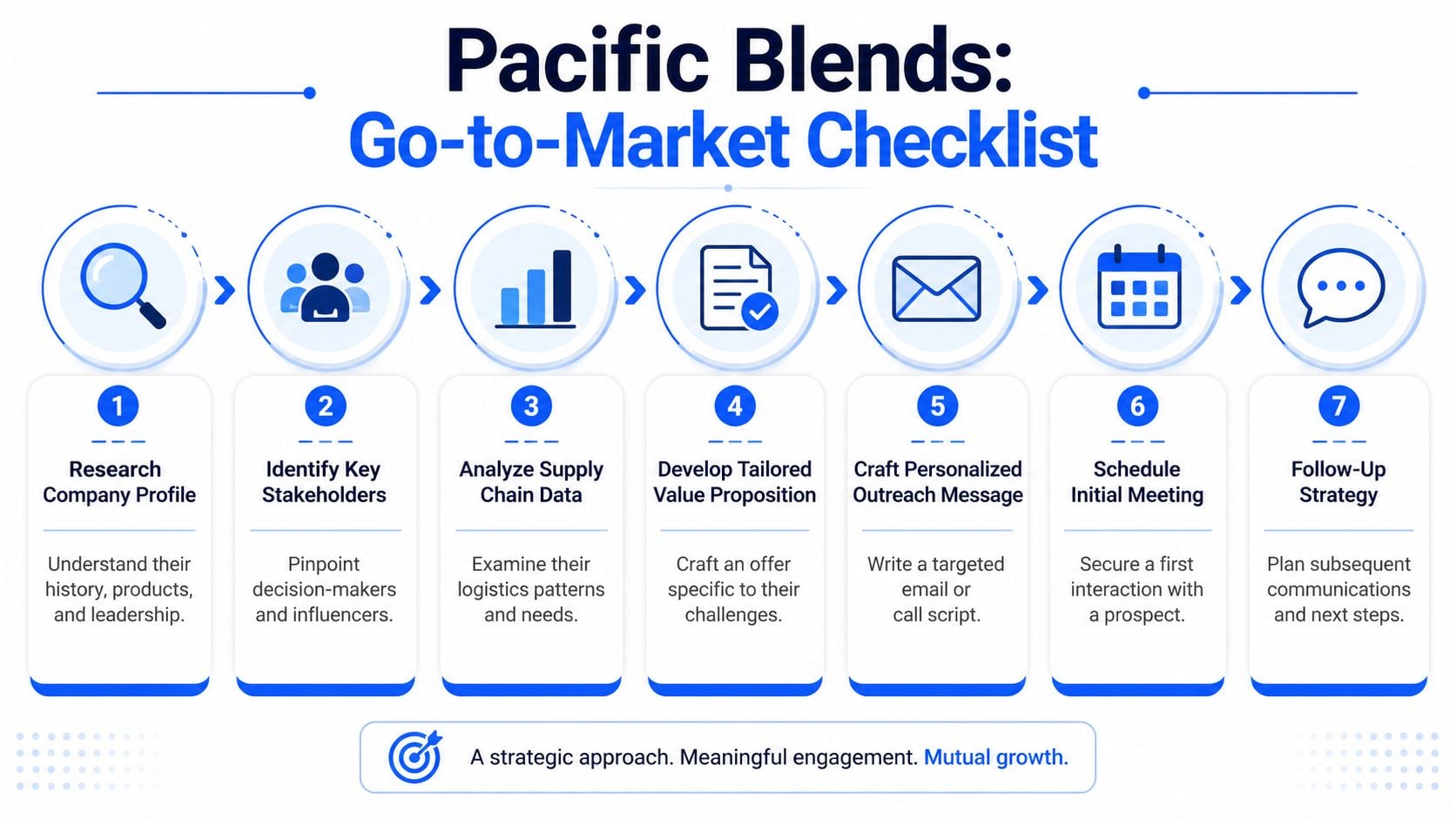
The working checklist
Assign one account owner
Pacific Blends is specialized enough that scattered outreach will dilute the effort. One owner should control research, messaging, and follow-up.Confirm live shipping patterns
Validate whether your lane assumptions hold up in actual trade records. Don't brief sales leadership on theory alone.Segment the likely buying centers
The relevant stakeholders may not sit in one department. Operations, logistics, procurement, and commercial leadership could all influence the decision.Choose one outreach angle first
Don't stack both major narratives into the first email. Lead either with surimi-related continuity and cost protection or with post-acquisition network integration.Map likely objections in advance
Expect some version of: “We already have providers,” “volumes are stable,” or “we only review partners when something changes.” Your answer should focus on resilience, integration, or lane-specific insight.Watch for acquisition-related freight openings
Pacific Blends' 2011 Renaissance Blends acquisition and later Vegelatum® acquisition show a clear growth-by-acquisition pattern, creating recurring opportunities for logistics providers that can support product-line integration, according to Pacific Blends growth news.Build a follow-up sequence with a point of view
Follow-up should add intelligence, not just ask for time again. Bring a routing idea, a handoff risk observation, or a category-specific operational question.
The standard to hold your team to
A good campaign against Pacific Blends should leave the prospect feeling understood, not processed.
If your message could be sent unchanged to any food manufacturer in British Columbia, it's not ready for Pacific Blends.
This account is strongest for logistics teams that can connect a niche ingredient position to real network demands. The company's public footprint is small enough to be overlooked and specialized enough to reward careful sellers. That's a favorable combination if your team is willing to do the homework.
Coreties helps freight forwarders, carriers, and logistics sales teams turn trade data into real prospecting action. If you want to identify shippers like Pacific Blends, validate their likely lanes, surface decision-makers, and launch targeted outreach faster, explore Coreties.