Marathon Sales Inc a Prospecting Guide for Forwarders
You're scanning a lead list, trying to separate real shipping opportunities from noise. Then Marathon Sales Inc. shows up. At first glance, the name looks like a dead end. It sounds like a sales coaching firm, a motivational blog, or another company built around the “sales is a marathon” cliché. For a freight forwarder or […]

You're scanning a lead list, trying to separate real shipping opportunities from noise. Then Marathon Sales Inc. shows up.
At first glance, the name looks like a dead end. It sounds like a sales coaching firm, a motivational blog, or another company built around the “sales is a marathon” cliché. For a freight forwarder or carrier rep, that kind of ambiguity usually means wasted research time.
This one is different.
If you qualify Marathon Sales Inc. like a logistics prospect instead of a branding puzzle, the opportunity gets clearer. This is an industrial distributor tied to spring supply, specialty components, and customer expectations that leave little room for shipping mistakes. That matters because the strongest leads often hide behind generic names. The reps who win them are the ones who dig past the surface and figure out what moves, what can go wrong in transit, and where a forwarding partner can reduce risk.
Is Marathon Sales Inc a Good Freight Lead
A name like Marathon Sales Inc. can send you in the wrong direction fast. Search results around “marathon sales” often drift into general selling advice, unrelated commerce commentary, or other uses of the word Marathon. That creates a basic prospecting problem. You can waste an hour chasing a company that isn't a shipper, or you can dismiss a legitimate industrial account because the name sounds too broad.

Marathon Sales Inc. deserves the second look. Public content around the company often misses its actual role in reliable spring distribution within supply chains, even though that's the relevant lens for a freight seller. The same background also notes that supply chain disruptions cost the U.S. economy over $1.2 trillion in 2023 according to the company's industry framing on the Marathon Sales Inc. author page. For a forwarder, that's the point. You're not evaluating a slogan. You're evaluating a distributor whose customers may feel the cost of delay quickly.
What makes it worth qualification
A freight lead is good when three things line up:
- The company moves real product that supports downstream operations.
- Service failure hurts their customer, not just their shipment.
- You can speak to the business model in plain terms instead of sending a generic capacity pitch.
Marathon Sales Inc. fits that profile. If you build outbound around industrial distributors, this is the kind of account that can respond well to a message tied to continuity, replenishment, and exception handling.
Practical rule: If the lead name is vague but the company sells niche industrial components, qualify the product risk before you judge the account.
A lot of reps struggle here because they start with lane questions too early. Start with function. Then move to freight.
If your team wants a cleaner process for sorting names like this out before outreach, this guide on how to generate leads in logistics is a useful reference point.
Decoding What Marathon Sales Actually Does
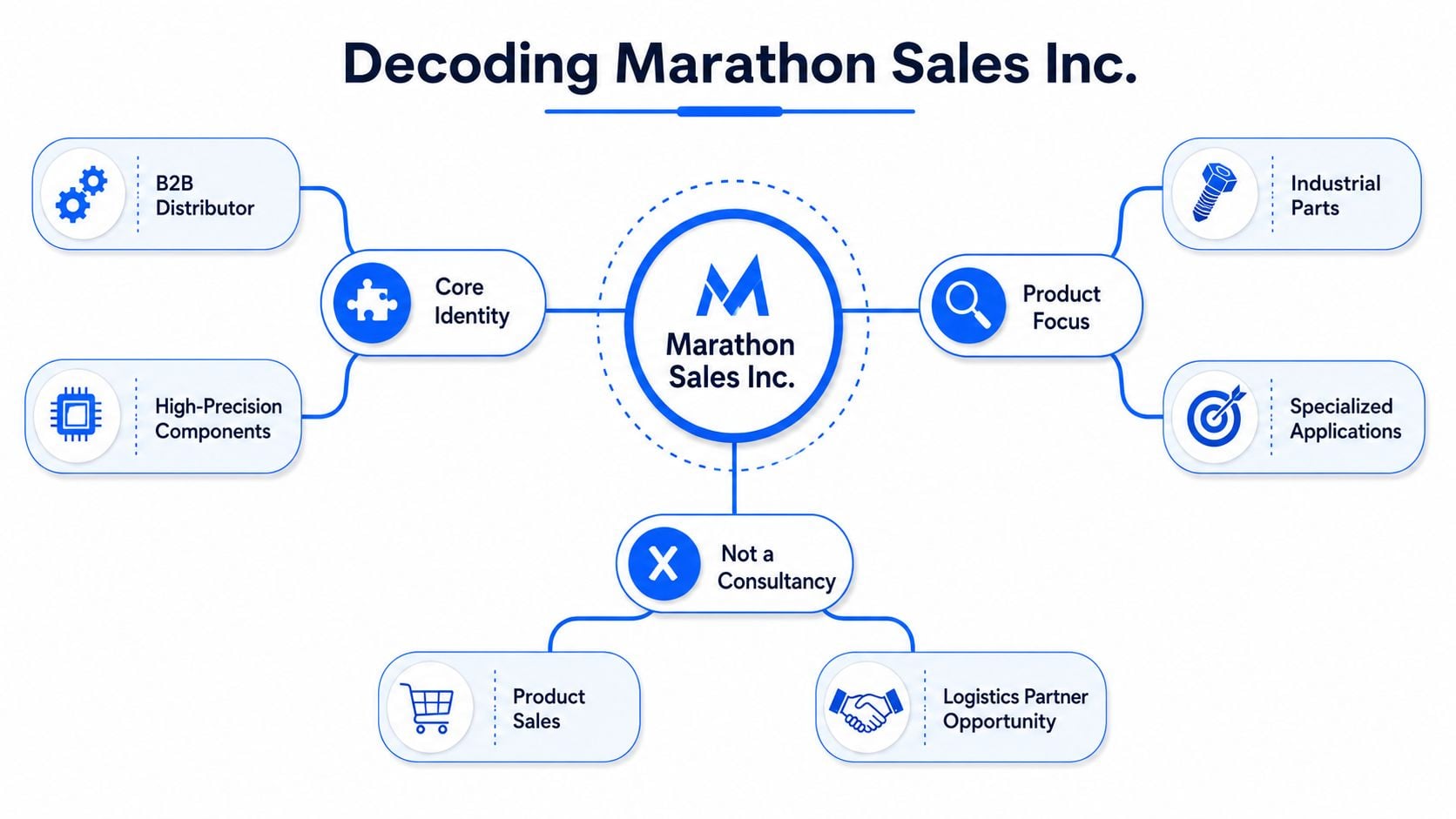
Marathon Sales Inc. is not a consulting brand built around sales advice. It operates in industrial component distribution, with a clear emphasis on precision die springs and related specialty products.
That distinction changes the freight conversation immediately. You're not pitching a generic B2B office account. You're looking at a company connected to manufacturing support, replacement cycles, and customers who buy parts because equipment has to keep running.
The product tells you the freight stakes
One concrete example matters here. Marathon Sales Inc. offers die springs engineered for extended cycle life, and a listed product, the MHC53 Red Die Spring (Part No. 14716), is priced at $606.75 in the Raymond die spring catalog. That single fact does two things for a freight rep.
First, it signals that this isn't low-concern commodity freight. Second, it suggests buyers may care more about getting the right part on time and in good condition than chasing the absolute cheapest transportation option.
What that means in plain language
Industrial spring distribution usually creates a different shipping profile than bulk consumer goods. The shipment may not be huge, but the operational importance can be. A delayed spring, incorrect SKU, or damaged package can create disproportionate pain if the receiving customer needs that component for toolroom, maintenance, or production support.
Use that logic when you frame the account.
| Business reality | Freight implication |
|---|---|
| Specialized die springs | Accuracy matters more than broad generic service promises |
| Engineered industrial parts | Packaging, labeling, and shipment integrity matter |
| Buyers supporting equipment uptime | Expedited recovery options can become part of the sale |
Don't sell trucks first. Sell protection against preventable downtime, mispicks, and ugly delivery surprises.
What works and what doesn't
What works is talking about shipment control. That includes shipment visibility, careful handling, and a plan for urgent replenishment.
What doesn't work is treating Marathon Sales Inc. like a high-volume retail shipper. A message about “low-cost nationwide freight” is too broad. A message about moving high-value industrial parts with fewer exceptions is closer to the mark.
For a freight forwarder, this is the opening. The product itself gives you the value proposition.
Analyzing Their Likely Shipping Profile
Once you strip away the misleading name, the shipping picture starts to form. Marathon Sales Inc. operates as a distributor under the Marathon Worldwide Inc. umbrella and offers products such as die springs, air tools, and abrasives through its catalog ecosystem. Their associated partner materials also reference ISO 9001:2000 quality standards, which points to a supply environment where consistency matters, as shown in the Marathon Sales Inc. catalogs page.
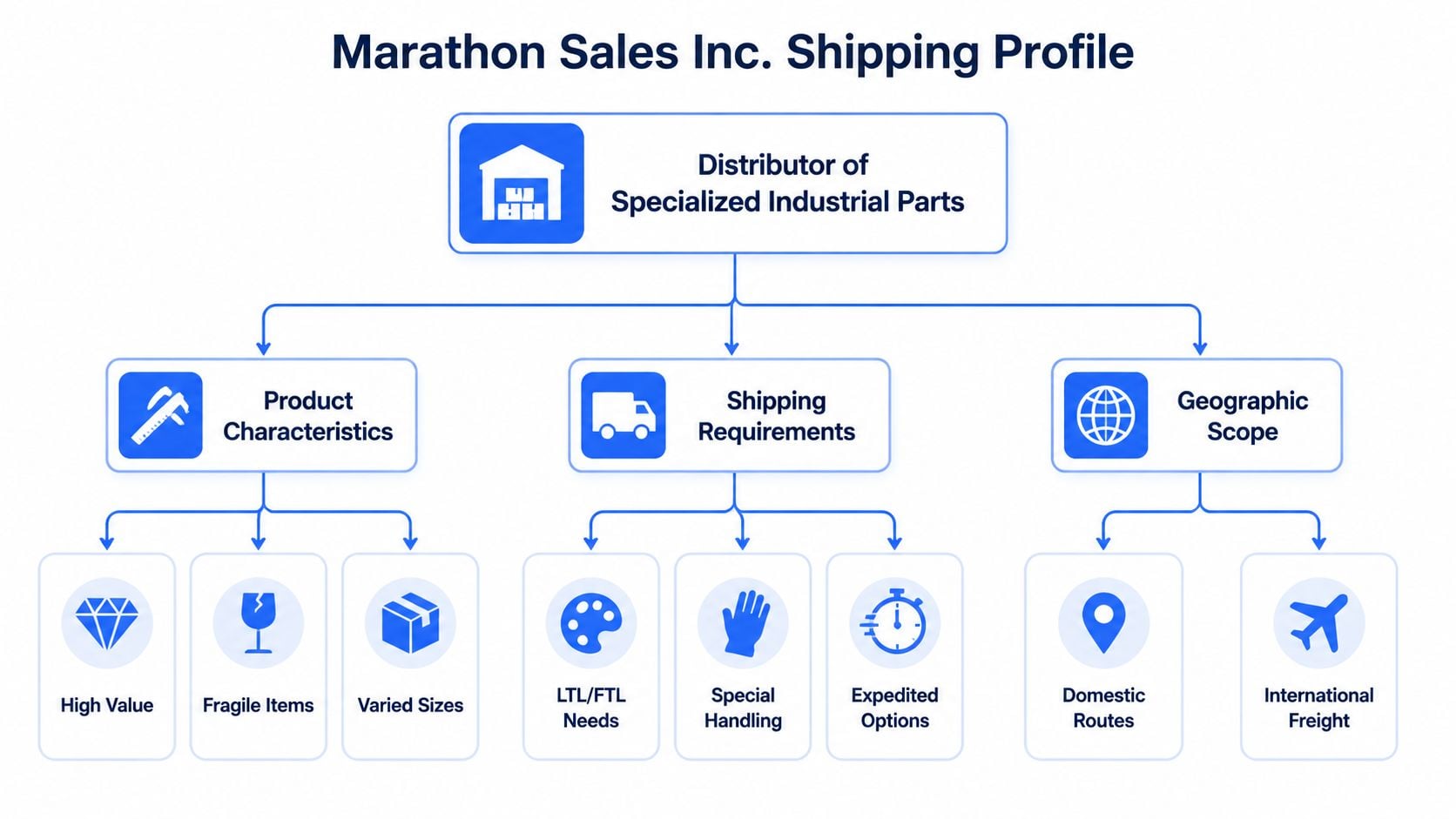
A distributor in that position usually creates a mixed freight profile. Not flashy. Not random. Steady, exception-sensitive, and operationally important.
The domestic profile a forwarder should expect
For a company handling specialized industrial components, domestic shipping likely centers on dependable replenishment. That usually points toward:
- LTL for routine outbound orders going to manufacturers, maintenance buyers, and industrial customers.
- Small parcel or courier-style moves for urgent parts where speed beats consolidation.
- FTL or dedicated moves when bundled orders, supplier transfers, or regional stock repositioning justify it.
The important trade-off is simple. Cheap linehaul with poor exception management usually costs more when the consignee is waiting on a part tied to production.
Here's the video context worth reviewing before you pitch service options:
Where international support may matter
A distributor tied to specialized product lines can also create import or cross-border opportunities, even when the visible business looks local. If product sourcing or supplier coordination extends beyond one domestic region, your offer should include more than pickup and delivery.
Consider these likely needs:
- Supplier-side coordination when origin readiness is uneven.
- Customs and document support if components move internationally.
- Airfreight fallback for line-down or short-notice replenishment.
- Shipment segmentation so urgent parts aren't trapped inside slower consolidated moves.
The shipper may not ask for “supply chain design.” They'll ask why a needed part still isn't on the dock.
What to pitch first
Lead with service architecture, not mode jargon. For Marathon Sales Inc., the strongest opening usually sounds like this:
- Reliable regional LTL execution
- Expedite options for urgent industrial orders
- Import and supplier coordination where product sourcing requires it
- Clear escalation when a shipment misses plan
That's a better fit than a generic capacity blast. Industrial distributors don't need more emails about trucks. They need fewer freight problems.
Verifying Credibility and Stability
Some leads look interesting on paper but fall apart once you check the basics. Marathon Sales Inc. doesn't have that problem.
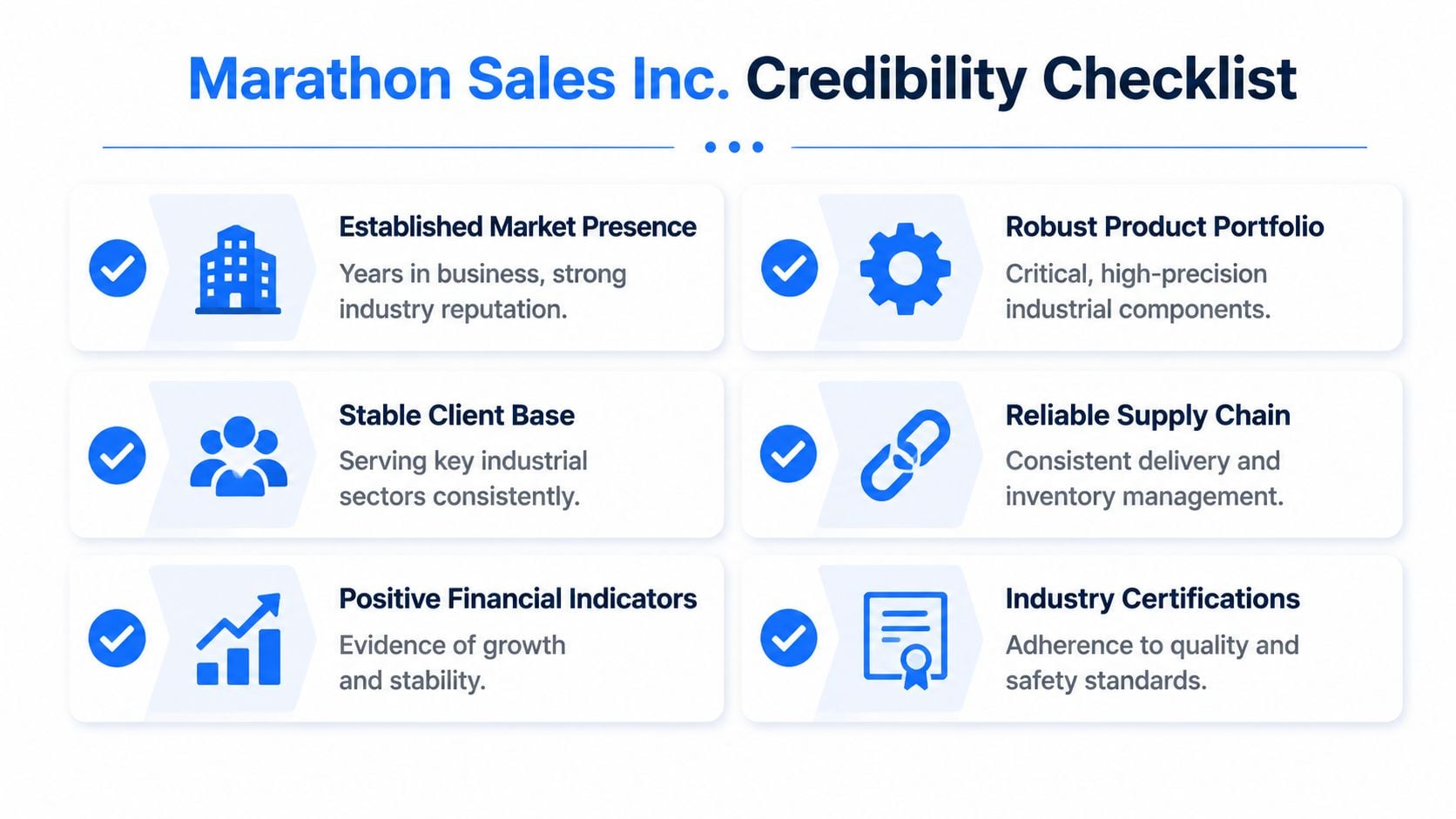
The company was founded in August 1996 and has been continuously operated by its President and Owner, Joe Misiura, for exactly 30 years as of 2026, according to the available company profile information on Joe Misiura's LinkedIn reference. It also operates from a dedicated commercial facility at 9100 Louisiana Street, Merrillville, IN 46410, with stable weekday business hours listed there. For freight qualification, that's a strong set of signals.
Why this matters to a sales rep
Longevity under one owner usually changes the sales approach. You're not dealing with a brand-new operation still improvising suppliers and shipping habits. You're dealing with a business that has likely built routines, vendor preferences, and expectations around responsiveness.
That creates two realities:
- The account is more credible, so the effort to research and personalize outreach is justified.
- The account may be harder to displace, because stable firms often stay with providers until someone shows a clear operational improvement.
A practical qualification screen
Use this quick screen before you reach out:
| Signal | What it means for freight sales |
|---|---|
| Long operating history | Lower chance you're chasing a temporary or thin account |
| Named owner leadership | Easier to map decision influence |
| Dedicated facility | Real pickup and delivery relevance |
| Stable business hours | Better alignment for routine operations and follow-up |
If international sourcing or export support becomes part of the discussion, compliance readiness matters early. For non-EU companies shipping into Europe, this overview of an EORI application for non-EU businesses is a practical reference to keep in your toolkit.
Stable companies rarely switch providers because of a cold pitch alone. They switch when a rep shows they understand the operational consequence of failure.
One more useful frame is how reliability gets communicated. This article on reliable shipping services is relevant because it mirrors the kind of service language industrial distributors tend to respond to. They care less about broad marketing claims and more about whether you can execute under normal pressure.
Actionable Prospecting Tactics and Messaging
If you call Marathon Sales Inc. with a generic “we handle all your freight needs” pitch, you'll sound like everyone else. The better move is to speak to the account the way an operations-minded distributor would evaluate a forwarding partner.
Start with the likely decision map. In a company with long-term ownership and a specialized catalog, primary influence may sit with the owner, a sales operations contact, or whoever manages order flow and vendor coordination. Don't overcomplicate that. Your first objective is to send a message that proves you understand what they sell and why delivery reliability matters.
Messaging that matches the business
This is a better opening than the average freight intro:
We work with industrial shippers that can't afford delivery errors on specialized components. If your team is shipping die springs, tools, or related parts to manufacturing customers, we can compare where tighter exception handling or expedited backup would reduce service risk.
That works because it connects freight performance to customer outcomes. It also avoids pretending you know their full network before a conversation.
A weak version sounds like this: “We offer competitive rates across all modes.” That doesn't separate you from anyone.
Four angles that usually get traction
Protect the consignee experience
Talk about on-time delivery, shipment accuracy, and escalation when an order goes off plan.Support urgent replenishment
Industrial distributors often need a fallback when standard transit won't do the job.Reduce friction in mixed-mode shipping
If some orders fit parcel, others need LTL, and a few need urgent air, say that plainly.Bring structure to visibility
If you use tools that improve execution discipline, mention the process, not the hype. This overview of the advantages of transport management systems is useful context for how TMS-driven workflows can help with shipment visibility, exception handling, and carrier coordination.
Keep the first outreach tight
Use short emails. Ask for a narrow conversation. Don't attach a rate sheet.
A workable sequence looks like this:
First email
Reference their role in industrial component distribution and ask whether they review options for outbound LTL, expedites, or supplier-side freight coordination.Follow-up call
Mention a specific shipping risk, such as urgent replacement orders or delivery exceptions to manufacturing customers.Second email
Offer one operational idea, not a brochure. For example, propose a review of where standard routing is enough and where backup service should exist.
If you need a framework for sharpening that message, this guide to value proposition development is a practical way to tighten your wording around customer risk instead of freight features.
One tool-based option
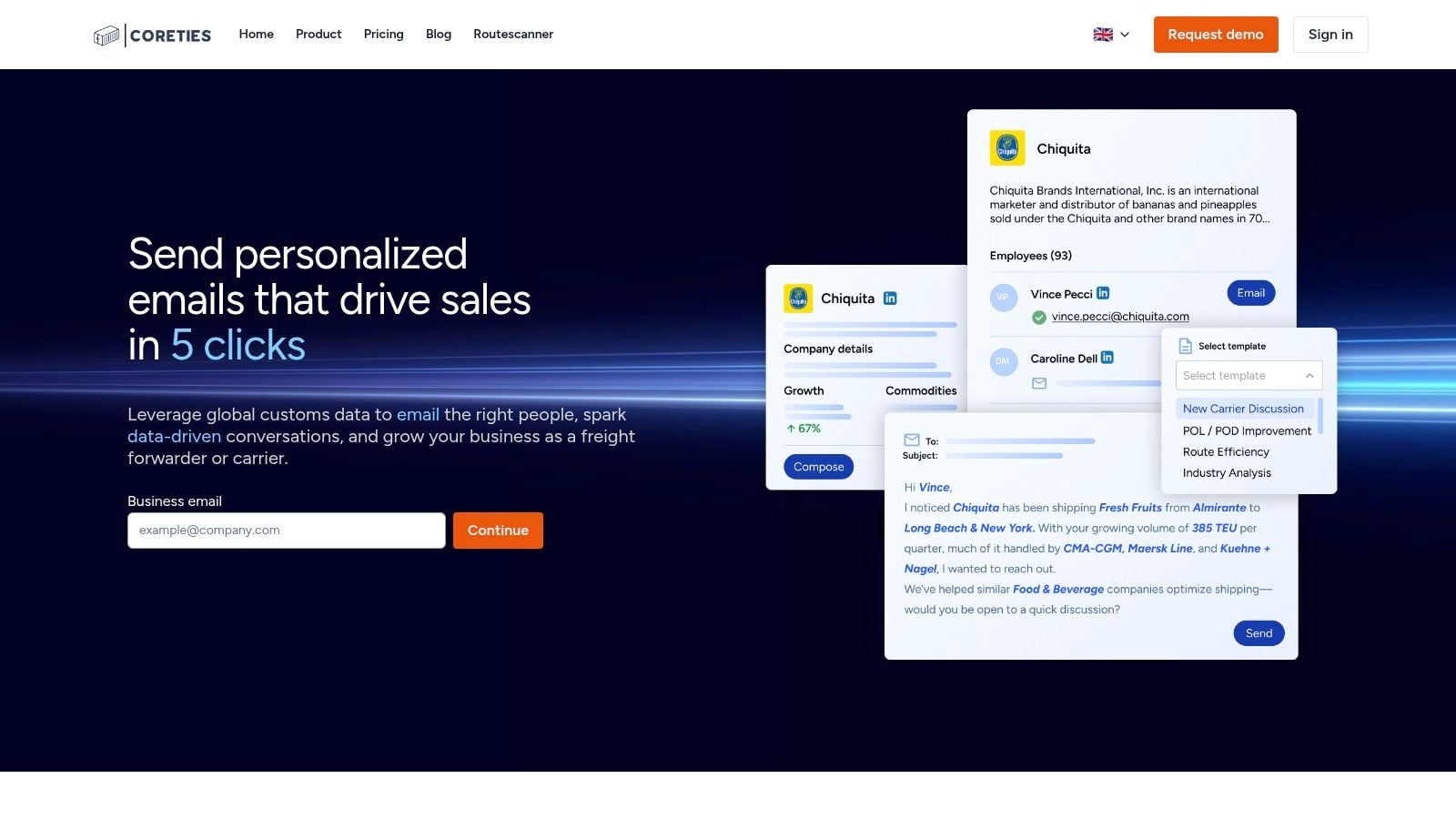
For teams prospecting similar industrial accounts at scale, Coreties is one option because it uses customs data to help identify shipper activity, relevant contacts, and outreach angles tied to trade lanes and buyer-supplier relationships. Used correctly, that helps you avoid blasting the wrong message to the right company.
The account doesn't need a flashy pitch. It needs a rep who can make freight sound useful.
Turning Insight into Your Next Opportunity
Marathon Sales Inc. is a good example of why surface-level prospecting fails. The name looks generic. The actual business is not. It points to industrial distribution, specialized components, and customers who likely care about reliability more than freight theater.
For a forwarder, that changes the playbook. You don't chase this lead with broad promises about capacity. You qualify the product role, map the likely shipping pressure points, and lead with service control. That's the repeatable part.
Use the same process on every ambiguous lead in your pipeline:
- Check what the company really sells
- Figure out what shipping failure would cost their customer
- Look for stability signals before spending outreach effort
- Write the message around risk reduction, not mode availability
That approach gets better results because it matches how industrial shippers think. They don't buy freight in the abstract. They buy confidence that the right product will arrive without creating downstream problems.
If you want to apply this prospecting method across more industrial shippers, Coreties helps freight teams turn customs data into qualified lead lists, find decision-makers, and build customized outreach around actual shipping activity instead of guesswork.