Your Definitive Guide to the Shoes HS Code System
The HS code for shoes is your product's passport for international trade, and it's all governed by Chapter 64 of the Harmonized System. This is the global standard for classifying footwear, whether you're importing or exporting. For example, a code starting with 6403 points to footwear with leather uppers, while one beginning with 6404 is […]

The HS code for shoes is your product's passport for international trade, and it's all governed by Chapter 64 of the Harmonized System. This is the global standard for classifying footwear, whether you're importing or exporting. For example, a code starting with 6403 points to footwear with leather uppers, while one beginning with 6404 is for textile uppers.
Getting to Grips with the Harmonized System for Footwear
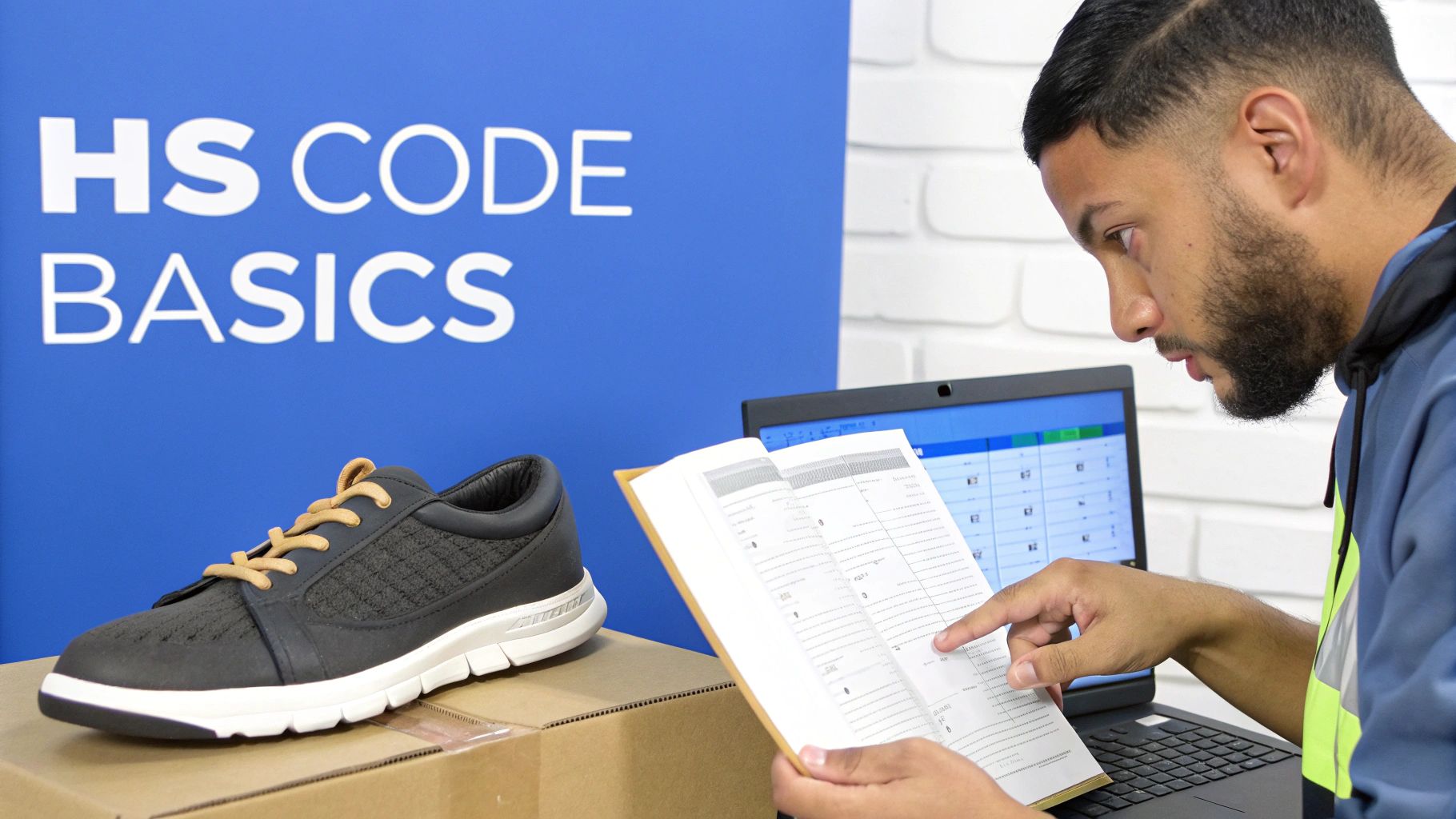
If you're in logistics or e-commerce, understanding how the Harmonized System (HS) applies to footwear isn't just helpful—it's essential. Think of the HS as a universal language for global trade. It assigns a specific numerical code to every product, telling customs authorities worldwide precisely what it is, what it's made of, and its intended use.
For anything you wear on your feet, the starting point is always Chapter 64. This section of the HS tariff schedule is dedicated exclusively to "Footwear, gaiters and the like; parts of such articles." The HS code itself is structured to reveal details in layers. The first two digits (64) lock in the product category (footwear), and each subsequent digit drills down into more specific characteristics.
Why Accurate Classification Is So Critical
Getting the HS code for your shoes right isn't just a box-ticking exercise. It's a core business function with real financial consequences. One small mistake can set off a chain reaction of expensive and frustrating problems.
Here’s what can happen when you get the code wrong:
- Hefty Fines and Penalties: Customs agencies don't take misclassification lightly. They often see it as an attempt to avoid paying the correct duties and will impose strict penalties.
- Frustrating Shipment Delays: An incorrect code is a major red flag. It almost guarantees your shipment will be pulled aside for inspection, leaving it stuck at the port for days or even weeks.
- Incorrect Duty Payments: You could end up overpaying duties, which directly cuts into your profit margins. Or you might underpay, which sounds good until you're hit with an audit and have to pay back duties plus interest.
Getting the fundamentals of Chapter 64 right is the first step toward building a smooth and reliable supply chain. It gives you the confidence to classify your footwear correctly, which means faster customs clearance and predictable costs. This foundational knowledge is key to tackling the more complex classification rules we’ll explore later in this guide.
Key Factors for Accurate Shoe Classification
To nail down the right HS code for a pair of shoes, you need to answer three core questions. These are the building blocks for any classification under Chapter 64 of the Harmonized System. Getting any of them wrong can throw off your entire declaration, leading to compliance issues and incorrect duty payments.
Think of this as your pre-classification checklist. Before you even glance at a tariff schedule, breaking down the footwear into these components will give you a clear and logical path to finding the correct code.
Identifying the Upper Material
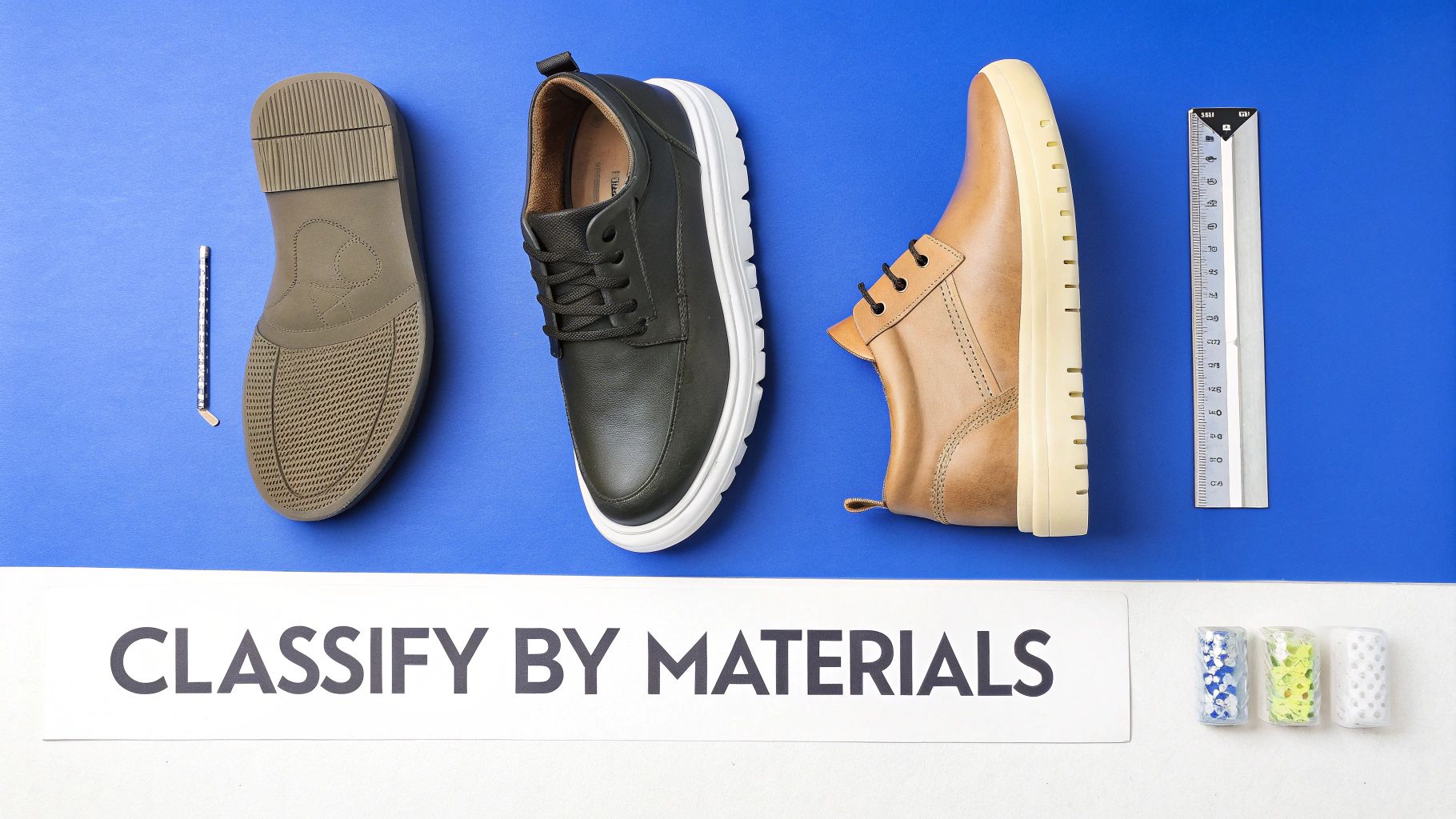
First up, what is the upper made of? This refers to the entire part of the shoe that sits above the sole. When customs officials look at a shoe, they focus on the material that makes up the largest part of the external surface area. It's crucial to ignore smaller bits and pieces like ankle patches, logos, or eyelet stays.
This single factor is the most important starting point for your classification.
- Leather Uppers: If the upper is predominantly genuine leather, you're almost certainly looking at heading 6403.
- Textile Uppers: Shoes made from materials like canvas, cotton, or other synthetic fabrics will generally be classified under heading 6404. If you need a deeper dive into materials, our guide on the fabric HS code can be a big help.
- Rubber or Plastic Uppers: For footwear like rain boots, sandals, or clogs where the upper is mainly rubber or plastic, your starting point is heading 6402.
Defining the Outer Sole Material
Next, you need to examine the outer sole—the part that actually touches the ground. This detail is absolutely critical for drilling down to the correct subheading once you've determined the primary heading from the upper material.
For instance, a shoe with a textile upper (heading 6404) could have an outer sole made of rubber, plastic, or even leather. Each of these combinations leads to a different subheading, which often means a different duty rate.
Determining Footwear Type and Purpose
Finally, what is the shoe actually for? The specific design and intended use of the footwear provide the final details needed for an accurate shoes HS code. The HS system has very specific categories for different styles.
One of the most common classification headaches is telling the difference between true "sports footwear" and casual "athleisure" sneakers. A genuine sports shoe is designed for a specific athletic activity, whereas a lifestyle sneaker is simply classified based on its materials.
Here are some key distinctions you’ll need to make:
- Is it genuine sports footwear, like football boots or ski boots?
- Is it waterproof footwear that meets specific manufacturing standards?
- Does the design cover the ankle?
- Is it a sandal that's held on by straps?
By methodically answering these three questions—upper, sole, and purpose—you create a solid framework that makes navigating the complexities of Chapter 64 much more straightforward.
A Quick Reference for Common Footwear HS Codes
Trying to find the right HS code in Chapter 64 can feel like a maze, especially when you're on a tight schedule. This section is designed to be your go-to cheat sheet, helping you quickly pinpoint the most likely HS code heading for common types of shoes.
Think of this as your starting block. It helps you get in the right lane before you dive deeper into the country-specific details we cover later in the guide. The whole point is to save you time and point you in the right direction from the get-go.
Common Footwear HS Codes at a Glance
This table breaks down footwear by its most critical classification factors: the upper material and the outer sole. Use it to quickly find the four-digit HS heading that probably applies to your product.
| Footwear Type | Primary Upper Material | Outer Sole Material | Typical HS Heading | Examples |
|---|---|---|---|---|
| Waterproof Footwear | Rubber or Plastics | Rubber or Plastics | 6401 | Wellington boots, galoshes, rain boots where the upper and sole are moulded together. |
| Sandals and Casual Shoes | Rubber or Plastics | Rubber or Plastics | 6402 | Flip-flops, slides, Crocs-style clogs, and other casual footwear. |
| Dress and Formal Shoes | Leather or Composition Leather | Any Material | 6403 | Leather boots, loafers, dress shoes, and safety footwear with metal toe-caps. |
| Sneakers and Casual Shoes | Textiles (e.g., canvas, mesh) | Rubber or Plastics | 6404 | Canvas sneakers (like Converse or Vans), espadrilles, and athletic-style casual shoes. |
| Specialised Footwear | Various Materials | Various Materials | 6405 | Slippers, house shoes, and other miscellaneous footwear not covered by other headings. |
This table is built for speed. For instance, if you're importing a shipment of classic leather loafers, a quick glance tells you that heading 6403 is your starting point. If it’s a container full of canvas sneakers, you’ll want to start digging into heading 6404.
Important Note: Remember, this table only gives you the four-digit heading. The full HS code will be much longer—often 10 or even 12 digits depending on the country—and requires you to specify more details like gender, ankle coverage, and construction.
By using this table first, you can confidently find the right classification path. It’s a simple step that helps cut down on mistakes and prepares you for the next stage: determining the complete, compliant HS code for your specific product.
A Step-By-Step Method to Determine Your HS Code
Pinpointing the correct shoes HS code isn't about guesswork; it's about following a methodical process. Getting this right from the start is the key to ensuring compliance and avoiding the kind of expensive delays and penalties that can wreck your shipment timeline. The repeatable method I'll lay out here mirrors the exact logic customs professionals use to classify footwear.
It all starts with getting your hands on the product. You need to physically examine the shoe and identify two key things: the dominant material of the upper's external surface and the material of the outer sole. This initial analysis is the absolute foundation for navigating the Harmonized System Tariff Schedule correctly.
This decision tree gives you a great visual of the key questions you need to ask yourself to classify a shoe based on its physical makeup.
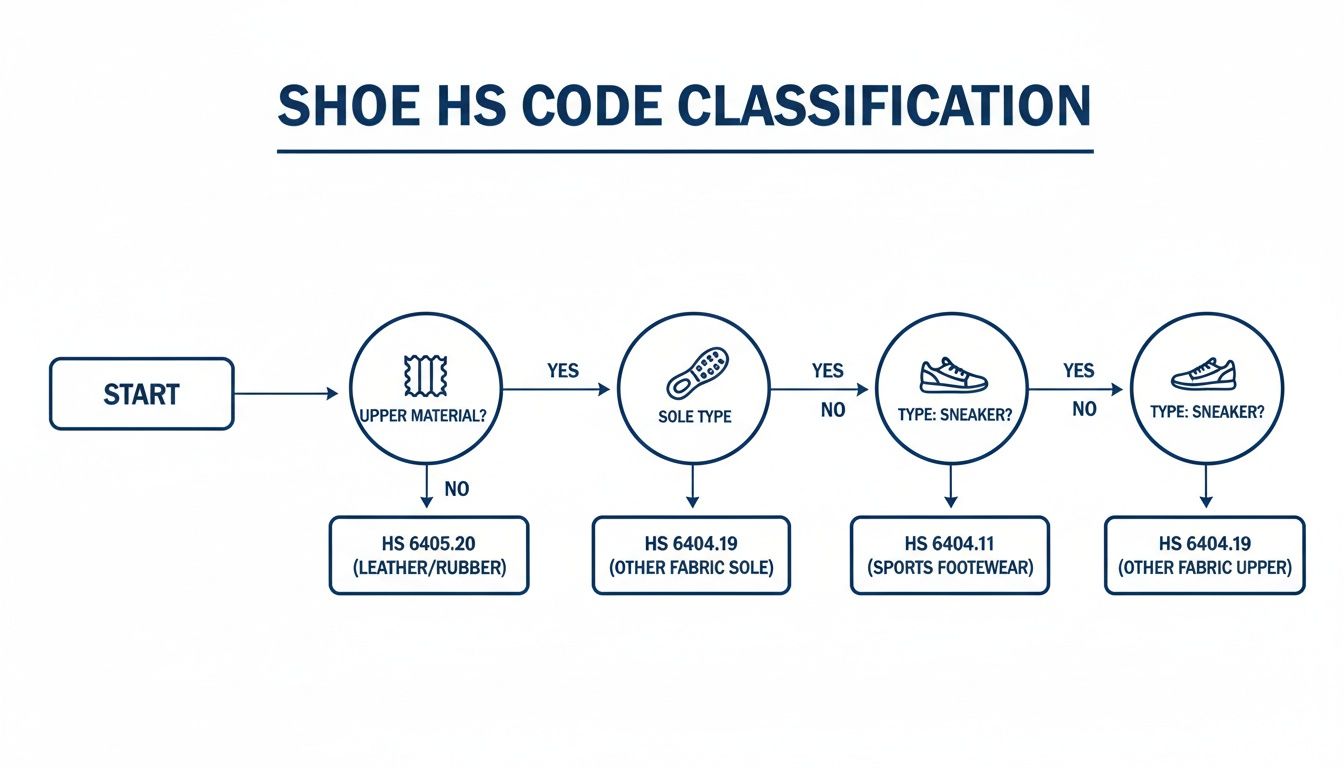
As you can see from the flowchart, figuring out the upper and sole materials points you toward the right chapter. From there, the shoe's actual purpose helps you narrow it down to the final subheading.
Navigating the Tariff Schedule
Once you've identified the core materials, you're ready to dive into the official tariff schedule. For any kind of footwear, this journey always begins at Chapter 64. The next step is to drill down into the specific headings and subheadings.
Here’s how the classification process breaks down, step by step:
- Start with Chapter 64: This is the universal starting point for all footwear. No exceptions.
- Identify the Heading (First 4 Digits): This is where your material analysis comes in. A shoe with a predominantly leather upper will likely fall under heading 6403, while one with a textile upper points you towards 6404.
- Determine the Subheading (Digits 5 & 6): This next level of detail often hinges on other features. Is the outer sole made of rubber or plastic? Is the shoe for men or women? Does it cover the ankle? These details determine the final two digits of the subheading.
- Consult Chapter and Section Notes: This is a crucial step that many people miss. These notes contain official definitions and rules that can override what might seem obvious. For example, the notes for Chapter 64 provide a very strict legal definition of what actually qualifies as "sports footwear," and your product has to meet it.
If you're dealing with a complex shoe made from several different materials, you'll need to turn to the General Rules of Interpretation (GRIs). These rules are your guide for classification, explaining how to determine a product's "essential character" or which heading to choose when more than one seems to fit.
By applying this structured approach, you can confidently work out the complete and compliant shoes HS code. This ensures your shipping documents are spot-on, helping your goods clear customs without a hitch.
Common Classification Pitfalls and How to Avoid Them
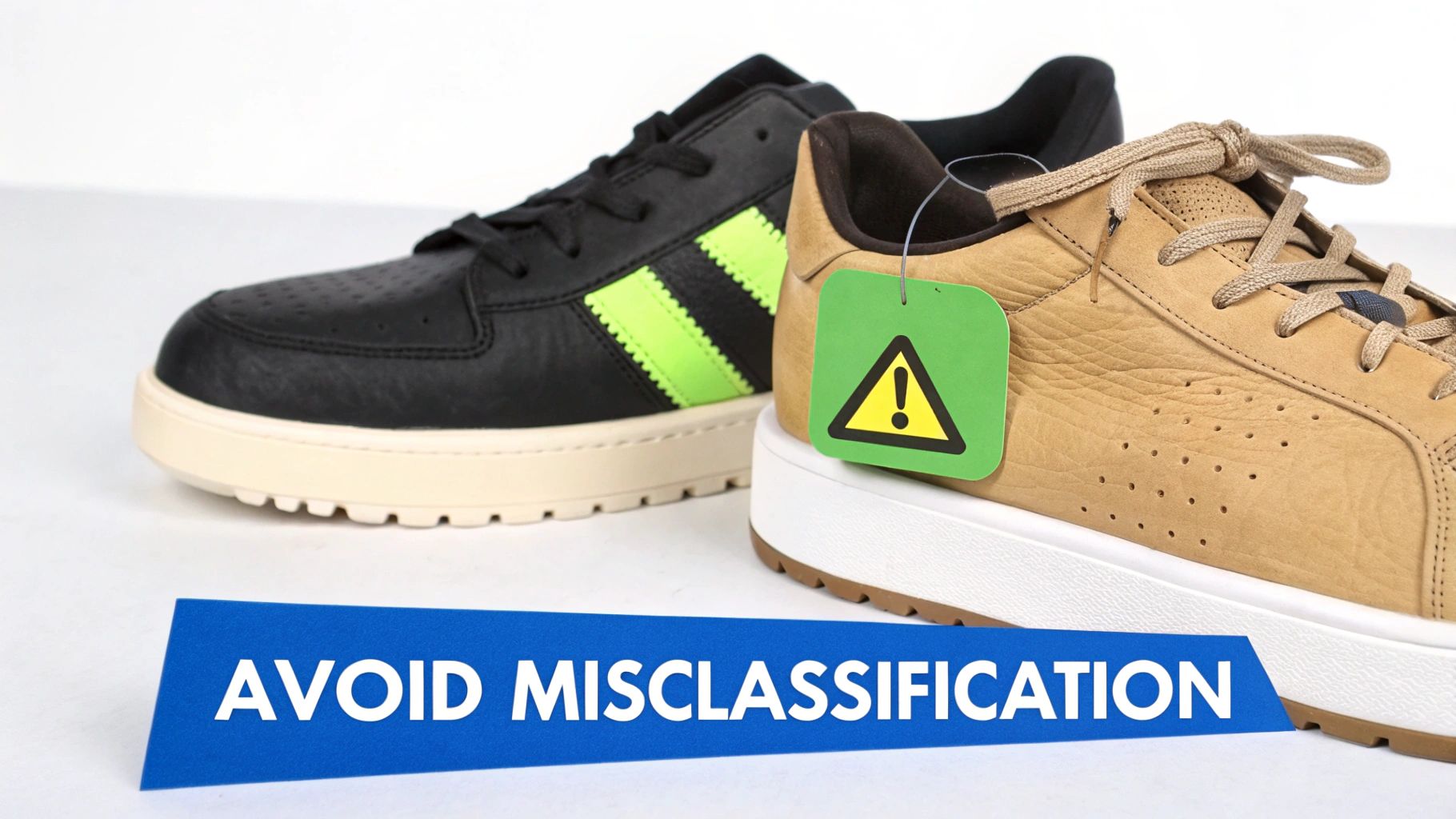
Even the most experienced logistics professionals can trip up when assigning a shoes HS code. Misclassification isn't just a minor error; it's a red flag for customs, often triggering inspections that lead to costly delays and unexpected fines that can snarl your entire supply chain.
Getting ahead of these common mistakes is the best way to keep your shipments moving. One of the biggest hurdles is classifying footwear made from mixed materials. The golden rule here is to classify the shoe based on the material that makes up the largest part of the upper's external surface area. It's crucial to ignore small add-ons like ankle patches, logos, or decorative reinforcements when making this assessment.
Misinterpreting a Shoe's Purpose
A classic mistake is mixing up "athleisure" shoes with genuine "sports footwear." Customs authorities are very particular about this distinction. Just because a shoe looks sporty doesn't mean it gets classified as one.
True sports footwear, which generally falls under subheading 6404.11, must be designed for a specific athletic activity. Think running shoes with spikes, football boots with cleats, or specialised cycling shoes. Your everyday casual sneakers, no matter how athletic they look, belong elsewhere. They are typically classified based on their materials, such as under 6404.19 if they have textile uppers.
Getting Waterproof Construction Wrong
Another frequent point of confusion is the difference between waterproof and water-resistant footwear. This isn't just semantics; it determines whether a shoe belongs in a completely different HS heading.
Only items classified under heading 6401 are considered truly waterproof in the eyes of customs. Here’s how to tell them apart:
- Genuinely Waterproof (6401): This code is reserved for footwear, like classic wellington boots, where the upper and sole are a single moulded piece. The key is that the upper isn't fixed to the sole with stitching, nails, or other traditional methods.
- Water-Resistant: A leather hiking boot that's been treated to repel water doesn't fit into the 6401 category. It should be classified according to its main material, which would likely place it under heading 6403.
By staying mindful of these tricky areas, you can dramatically increase the accuracy of your shoes HS code declarations and pave the way for a much smoother customs process.
A Look at Singapore's Footwear Trade
For any logistics professional based in Singapore, having a solid grasp of the market isn't just helpful—it's a massive advantage. When you look at the footwear trade through the lens of data, you start to see where the real growth opportunities are. It’s about turning compliance knowledge into a strategic tool.
Think about it: connecting a specific shoes HS code to its commercial value gives your sales team the power to have much smarter conversations with potential clients. You're no longer just talking about shipping; you're talking about market trends and opportunities.
Singapore’s role as a major hub for footwear imports and exports is crystal clear in the trade data. Digging into this data helps you map out the high-volume trade routes and identify the most valuable types of shoes passing through our ports. This kind of market intelligence is exactly what you need to fine-tune your services for the most profitable parts of the industry.
Imports vs. Exports: The Story in the Numbers
The balance between what comes in and what goes out tells you a lot about the market's pulse. Take leather footwear, for example. The trade dynamics here have seen some big shifts.
In a recent year, Singapore exported $129 million in leather footwear, which placed it as the 37th largest exporter in the world. But that's only half the story. During that same period, the country imported a staggering $402 million in leather footwear, making it the 25th largest importer globally. This gives you a clear sense of where the demand lies.
This gap between imports and exports points directly to opportunities. A strong import market, especially for high-value items like leather shoes, signals a steady need for top-notch inbound logistics services.
By zeroing in on these high-value import lanes, freight forwarders can specifically target shippers who depend on fast, reliable customs clearance and final-mile delivery. Suddenly, a simple HS code becomes a powerful signal for generating new business.
Understanding these trade flows is the first step. To really add value for your clients, you need to master the local customs landscape. You can get into the nitty-gritty with our detailed guide on the HS Code in Singapore. Armed with this knowledge, you can offer shippers more than just a service—you can offer them a strategic partnership.
Spotting Growth Opportunities in Niche Footwear Categories
Digging into customs data is about much more than just ticking compliance boxes. For a savvy logistics sales team, it's a goldmine of actionable intelligence for business development. By analysing specific shoes HS code groups, you can pinpoint high-growth segments, spot durable market trends, and ultimately, uncover lucrative new customer pipelines. It’s the art of turning raw data into strategic direction.
Take HS code 6404, for example, which covers footwear with textile uppers. This category is a big one, often including the casual sneakers and athletic-style shoes that represent a huge volume of shipments passing through major trade hubs like Singapore. Just by examining the import and export figures for this single code, you can get a read on market resilience and identify steady consumer demand.
This granular approach is what allows freight forwarders to shift from a broad, scattergun strategy to targeting shippers in specific, highly profitable niches.
Using Data to Pinpoint Market Strength
The numbers really drive this point home. While the broader footwear category highlights Singapore's critical role as a regional trade hub, the specifics are even more revealing. In a recent year, Singapore's total footwear exports hit $389 million, ranking it as the 36th largest exporter in the world.
But inside that impressive figure, the commodity group 6404—footwear with textile uppers—was the star of the show. It accounted for a massive $265 million in exports, representing a significant 9.74 percent increase over the previous year. You can explore more about these trade dynamics to see the growth firsthand.
This data paints a very clear picture: while the overall footwear market is valuable, certain segments are absolutely booming. That kind of insight is invaluable for sales teams, letting them focus their energy on shippers dealing in these high-demand products. By connecting customs data directly to business development, a deep understanding of the shoes HS code becomes a powerful tool for strategic planning and winning new business in a tough market.
Tapping Into Customs Data for a Competitive Edge
Getting the right shoes hs code isn't just about ticking a compliance box—it's your gateway to powerful market intelligence. When you know how to use customs data platforms, you can turn this regulatory detail into a real strategic advantage, uncovering trends that give your sales teams a serious leg up.
By digging into import and export data linked to specific HS codes, you can see what’s really happening with pricing and sourcing. This means you can have much smarter, value-driven conversations with shippers. Instead of just quoting rates, you can start offering genuine insights on how they can optimise costs and improve their supply chain visibility. If you want to get better at sifting through this information, our guide on using an HS Code filter is a great place to start.
From Compliance to Commercial Insights
This data-first mindset shifts HS code knowledge from a simple customs chore into a powerful tool for finding good leads and spotting market shifts.
Take Singapore's footwear price indices, for example. They offer a clear window into cost dynamics affecting supply chains. A recent report showed the Export Price Index for footwear at 100.8, while the Import Price Index was just 82.2. That’s a significant 11.1% drop in import costs year-on-year. You can find more on these economic indicators at SingStat.
This is the kind of specific pricing intelligence that allows your team to find shippers who are most exposed to cost changes and offer them logistics solutions at exactly the right time.
Of course, to really sharpen your competitive edge, you'll want to refine and analyse your datasets even further. Exploring the best data enrichment tools is a smart next step to turn raw customs data into truly actionable business intelligence.
Got Questions? We've Got Answers on Footwear HS Codes
Diving into footwear classification can bring up some genuinely tricky situations. Let's tackle a few of the most common questions that pop up for importers and exporters trying to nail down the right shoes HS code.
How Do I Classify a Shoe With a 50/50 Upper?
This is a classic customs puzzle. When a shoe's upper is made of two or more materials and no single one makes up the majority, you'll need to turn to the General Rules of Interpretation (GRIs).
Your first step is to determine the material that gives the shoe its "essential character". If you can't confidently decide that, the rules point to a simple tie-breaker: you must use the HS heading that appears last in numerical order among those you're considering. Don't forget to check the specific notes for Chapter 64, as they often provide the final say.
What's the Difference Between Sports and Athleisure Shoes?
This one trips up a lot of people. Customs authorities have a very narrow definition of "sports footwear". They’re looking for shoes designed exclusively for a specific athletic activity – think specialised footwear like track spikes or cycling shoes with cleats.
"Athleisure" shoes, on the other hand, are a different story. Even though they look like sports shoes, they're designed for casual, everyday wear. Because of this, they are almost always classified based on their materials (like heading 6404 for textile uppers) rather than under the specialised sports footwear headings.
The golden rule here is that function beats appearance every time. A running shoe look-alike meant for walking around town is not "sports footwear" in the eyes of customs.
Can I Use the Same HS Code for All Countries?
Yes and no. The first six digits of an HS code are part of a globally harmonised system, so they are consistent across most countries. This gives you a solid starting point.
However, countries can (and often do) add their own digits to create longer, more specific national codes for their own statistical and tariff needs. This means that while the 6-digit code is universal, you absolutely must verify the full HS or HTS code for your destination country. Using the wrong national code can lead to incorrect duty payments and compliance headaches.
Finding and connecting with the right shippers is easier than ever with Coreties. Our platform transforms complex customs data into targeted prospect lists, helping you find and engage decision-makers at companies that need your services. Visit https://coreties.com to see how you can streamline your business development.